Free LSAT Logic Game | Pure Sequencing

LSAT Blog Logic Game Pure SequencingUPDATE: You can get this game, along with several others I've written, in a free book.


This Logic Game I've written is what some would categorize as Pure Sequencing, Loose Sequencing, or Relative Ordering.

Whatever you call it, this type of game requires you to put variables in order, just like Basic Linear games do.

So what's the difference between Pure Sequencing and Basic Linear?

In Pure Sequencing, most of the rules involve the relationship between one variable and another. They'll say things like "A is before B" or "C is after D."

In Basic Linear games, you'll have a few rules that refer to specific and defined "slots" or places within the ordering.

Because the rules for Pure Sequencing games differ from those in Basic Linear games, the most efficient diagrams for these types of games differ a bit from those you'd use for Basic Linear games.

Instead of using slots, I recommend using short lines or "branches" to represent the relationships between variables. In other words, draw lines between variables to indicate their relationships.

Represent something like "A is before B" as "A-B."

Please post your thoughts and questions in the comments!

***

Here's this week's Logic Game:

At the annual meeting of the Magicians' Alliance, 8 magicians-L, M, N, O, P, Q, R, and S- perform their latest illusions, one magician at a time. The order in which the magicians perform their illusions is consistent with the following conditions:
L and Q each perform at some time after P.
S performs at some time before O and L.
M performs at some time before S.
P performs at some time after N.
S and N each perform at some time after R.

1. Which one of the following could be the order in which the magicians perform their illusions?

(A) M, N, R, S, P, Q, L, O
(B) S, M, R, N, P, L, Q, O
(C) R, N, M, P, O, S, Q, L
(D) R, M, S, L, N, P, Q, O
(E) M, R, S, N, O, P, Q, L


2. Which one of the following magicians CANNOT perform third?

(A) M
(B) N
(C) O
(D) P
(E) S


3. If O is the fourth magician to perform, then which one of the following must be true?

(A) M is the second magician to perform.
(B) L is the fifth magician to perform.
(C) P is the sixth magician to perform.
(D) Q is the seventh magician to perform.
(E) L is the eighth magician to perform.


4. If P performs before S, then each of the following must be false EXCEPT:

(A) R is the third magician to perform.
(B) S is the fourth magician to perform.
(C) P is the fifth magician to perform.
(D) Q is the sixth magician to perform.
(E) S is the seventh magician to perform.


5. If R performs after M and O performs before P, then which one of the following could be true?

(A) M is the second magician to perform.
(B) O is the third magician to perform.
(C) N is the fourth magician to perform.
(D) S is the fifth magician to perform.
(E) L is the sixth magician to perform.


***

The text below contains the answers to the above Logic Game.

1. E
2. C
3. C
4. D
5. C

***

See my explanation and diagrams of this game in Logic Games Pure Sequencing Diagram | Explanation.

***

Also see my explanation of this game's set-up in Logic Games Pure Sequencing Step-by-Step Diagram.

***

For some LSAC-written Logic Games like this one, check out PrepTest 33, Game 1 and PrepTest 38, Game 1 in The Next 10 Actual, Official LSAT PrepTests.

Photo by dannysullivan / CC BY 2.0

(The above photo is from the episode "Spring Break" in the TV show Arrested Development. GOB makes the Bluth family's yacht "disappear." I can't believe someone actually made Lego scenes based on a TV show either. I love Arrested Development, but Lego scenes are a bit much.)

Free LSAT Logic Game | Grouping: Matching

LSAT Blog Logic Games Grouping MatchingYou might not know this, but a version of the LSAT has come to India. It's called, appropriately enough, LSAT-India.

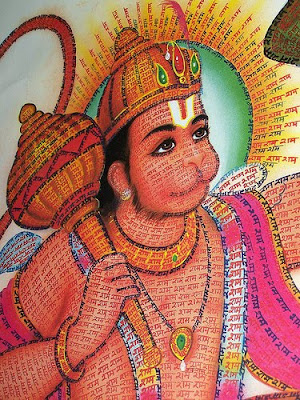
In honor of the LSAT's arrival in India, this week's Logic Game is about Hindu deities.

Disclaimer: This Logic Game is in no way meant to imply that all Indian students taking the LSAT are Hindu, nor is it meant to imply that Hindu students would ever pray to deities for LSAT assistance (or that they're the only students who'd pray to Hindu deities for assistance). I've simply given the game this topic because I think Hindu deities are cool, and because I promised I'd write a logic game about non-Greek deities.

Please post your thoughts and questions in the comments!

***
Here's this week's Logic Game:

Exactly four students-Arjun, Bobby, Jason, and Puja-pray to exactly seven Hindu deities-Ganesha, Hanuman, Krishna, Lakshmi, Rama, Shiva, and Vishnu-for assistance in achieving top LSAT scores. No deity answers the prayers of all four students, but each deity answers at least one student's prayer. The deities answer the students' prayers according to the following conditions:
Neither Lakshmi nor Rama answers Bobby's prayers, but Ganesha and Krishna both answer Bobby's.
Hanuman, Krishna, and Shiva answer Puja's prayers.
Hanuman answers at least three students' prayers, but Krishna and exactly one other deity each answer exactly two students' prayers.
If Vishnu answers a particular student's prayer, Hanuman does not answer that student's prayer.
If Ganesha answers a particular student's prayer, Rama does not answer that student's prayer.
Lakshmi answers at least one of the same students' prayers as Vishnu does.
Any deity who answers Puja's prayers also answers Bobby's but does not answer Arjun's.
1. For how many of the seven deities can one determine exactly which students' prayers are answered by each?

(A) two
(B) three
(C) four
(D) five
(E) six


2. If Shiva does not answer Jason's prayers, which one of the following could be true?

(A) Ganesha and Krishna answer exactly the same students' prayers as each other.
(B) Lakshmi answers both Arjun's prayers and Jason's prayers.
(C) Both Lakshmi and Rama answer Jason's prayers.
(D) Exactly three of the seven deities answer Jason's prayers.
(E) Exactly four of the seven deities answer exactly one student's prayers.


3. Which one of the following, if known, would allow one to determine exactly which students' prayers are answered by each deity?

(A) Ganesha answers the prayers of exactly one student.
(B) Ganesha answers the prayers of exactly three students.
(C) Lakshmi answers the prayers of exactly two students.
(D) Rama answers the prayers of exactly two students.
(E) Shiva answers the prayers of exactly three students.


4. Which one of the following could be a pair of deities both of whom answer the prayers of exactly three students?

(A) Ganesha and Krishna
(B) Ganesha and Lakshmi
(C) Ganesha and Shiva
(D) Hanuman and Rama
(E) Hanuman and Vishnu


5. Each of the following could be a pair of deities both of whom answer the prayers of exactly two students EXCEPT:

(A) Ganesha, Krishna
(B) Krishna, Lakshmi
(C) Krishna, Rama
(D) Krishna, Shiva
(E) Krishna, Vishnu


6. Which one of the following is a complete and accurate list of deities, any one of whom could be a deity who answers Arjun's prayers?

(A) Ganesha, Hanuman, Lakshmi, Rama, Shiva, Vishnu
(B) Ganesha, Krishna, Lakshmi, Rama, Vishnu
(C) Ganesha, Lakshmi, Rama, Vishnu
(D) Hanuman, Lakshmi, Rama, Vishnu
(E) Lakshmi, Rama, Vishnu


7. Which one of the following CANNOT be true?

(A) Exactly three of the seven deities answer exactly the same students' prayers as each other.
(B) Exactly three of the seven deities answer Arjun's prayers.
(C) Exactly three of the seven deities answer Jason''s prayers.
(D) Exactly four of the seven deities answer Arjun's prayers.
(E) Exactly four of the seven deities answer Jason's prayers.


Here's one more question, just for fun:

8. Each of the following could be a complete and accurate list of students whose prayers are answered by Ganesha EXCEPT:

(A) Arjun, Bobby
(B) Bobby, Jason
(C) Bobby, Puja
(D) Arjun, Bobby, Jason
(E) Bobby, Puja, Jason

***

Read the below if you have no idea how to set up this game, and you want a hint.

Make the deities your "base" - not the students. This will allow you to make inferences more easily.

***

The text below contains the answers to the above Logic Game.

1. B
2. E
3. D
4. C
5. E
6. C
7. D
8. D

***

See my explanation and diagrams of this game in Logic Games Matching Diagram | Explanation.

***
If you want to try several LSAC-written Logic Games that are similar to the one above, check out the 4th category of games in 7 LSAT Logic Games That Repeated on Future PrepTests.

Photo by pingu1963

Reading Comprehension Questions | Inference and Main Point

LSAT Blog Reading Comprehension QuestionsYou've probably noticed much of the LSAT is about presenting simple things in a confusing way. The LSAT is all about hiding what's staring you right in the face. Reading Comp is no different.

If you've done more than a few Reading Comp passages, you've probably noticed by this point that RC passages tend to have a few of the following:

-main point/main idea questions
-primary purpose/function questions
-inference questions

This blog post will give a few quick tips on main point and primary purpose/function questions. I'll then go into detail with some tips for the more difficult types of RC inference questions.


Main Point Questions
Most of the time, these questions ask about the author's viewpoint or whichever viewpoint is given more attention and space in the passage.

In other words, this is often the aspect of the topic covered in the majority of the passage, not only in one paragraph. LSAT-takers often fall for choices that describe specific parts of the passage, rather than the majority of the passage.


Primary Purpose/Function Questions
These questions are very similar to main point questions. The difference? The answer choices are worded a bit more generally. In other words, they use more abstract language. Pay very close attention to the verbs used in each answer choice.


Inference
Inference questions don't actually ask for new information. They'll often require you to take the contrapositive of something in the stimulus or passage or to simply connect different parts of what's already there. This means you simply have to read a little deeper into relevant lines of the passage. Reading "between the lines" can obviously be difficult to do, but there's a common "trick" LSAC often uses in more difficult RC inference questions.

For these questions, the passage gives you the information you need (as it does for all inference questions). However, the passage simply presents this info in a way that makes it difficult to see and extract this info. This information is presented indirectly. The passage tells you something the author (or a person within the passage) doesn't believe. As a result, if you read carefully, you'll indirectly learn about what the author (or person within the passage) does believe.


Example #1:
PrepTest 37, Section 1, Question 19 (page 292 in "Next 10").

The passage describes Ellison's views on the audience's relationship to works of art by describing his criticism of an opposing viewpoint.

What do I mean by this? I mean that it describes Ellison's interpretation of the criticisms, and then it says Ellison doesn't like these things.

In lines 20-28 of the passage, Ellison says the critics' view makes "the narrow assumption that audiences are capable of viewing the world only from their own perspectives."

If Ellison considers their opinion to make a narrow assumption, then Ellison must disagree with this narrow assumption and whatever directly follows from it.

If the critics think audiences can't view the world from other perspectives, Ellison must think audiences are capable of viewing the world from other perspectives. In other words, as we see in choice C, "audiences have the capacity" to view the world from another perspective (or "appreciate" different art).


Example #2:
PrepTest 36, Section 2, Question 11 (page 265 in "Next 10").

"Would be most likely to agree" means they're asking another Inference question. The passage in full of info about Binns' opinions, so there's no need to guess at what Binns "might" think.

In lines 33-37 of the passage, Binns says the scholars treat the writings as "an autonomous and coherent whole, underestimating the influence on English writers..."

Binns believes these scholars underestimate the influence on English writers, so we can conclude Binns does not actually believe these writings are an autonomous and coherent whole. If Binns thinks they're not as simple and clear as the scholars have implied, Binns must think they're actually more complicated.

In other words, as choice C suggests, Binns thinks these scholars have done a "superficially coherent reading."


Example #3:
PrepTest 35, Section 2, Question 26 (page 235 in "Next 10")

This example isn't quite the same as the other 5, but I included it simply because it's a good opportunity to demonstrate another way LSAC masks content. In this passage, LSAC tells us about legal positivism in the middle of presenting Dworkin's opinion.

The legal positivists believe laws' meanings are all about judges' interpretations of the law. Paragraph 2 talks a lot about legal positivists' belief in "underlying convention," so you could potentially answer the question o n the basis of that paragraph. However, LSAC's trick is to tell what legal positivists most clearly believe in lines 45-49 through Dworkin's eyes.

In order to learn what the legal positivists themselves believe, we need to put aside Dworkin's opinions and focus on the views of the legal positivists themselves. If we ignore Dworkin for a moment and focus on legal positivism itself, we'll learn they're focused on meaning as convention, rather than innate (core) meaning, so choice D fits.


Example #4:
PrepTest 29, Section 2, Question 10 (page 26 in "Next 10")

The people with the view in lines 51-54 believe "the attempt to write down traditional languages is misguided and unnecessary." To phrase this in a positive form, we can describe their viewpoint by saying they believe traditional languages will be okay even if we don't write them down.

As choice A suggests, they believe the languages will survive without being written down.


Example #5:
PrepTest 22, Section 1, Question 15 (page 121 in "10 More")

In lines 49-52, we learn the "anti-objectivist" personal narrative can bridge the gap between those who are "legal insiders" and people excluded from legal discourse and the accompanying power.

In these lines, we're indirectly learning legal insiders have the power, so choice B fits.


Example #6:
PrepTest 19, Section 3, Question 6 (page 29 in "10 More")

Lines 45-50 describe P.D. James' "determination to leave areas of ambiguity...and to distribute guilt..." as a "conscious rebellion against the traditional neatness of detective fiction."

By describing P.D. James' crime novels in contrast to the norm, the author of the passage tells us traditional detective fiction doesn't leave areas of ambiguity or distribute guilt. Thus, choice D fits because it describes the neatness of detective fiction with a synonymous statement: "straightforward assignment of culpability for the crime."

Photo by maynard / CC BY-NC-SA 2.0

Free LSAT Logic Game | Grouping: Selection / In-Out

LSAT Blog Logic Game Grouping Selection In-OutI've enjoyed forcing you to think about a spaceship with 8 monkeys and 7 Greek deities in a power struggle as you completed my first two LSAT Logic Games.

However, it's time to get back to the real world, at least for a little while, so the Logic Game I've written for this week has a more standard topic.

Please post your thoughts and questions in the comments!

***
Here's this week's Logic Game:

On Wednesday, a legislator remembers that she must vote on seven bills-defense, environment, free trade, gun control, health care, immigration, and judicial activism-by the end of the week. Because the legislator wants to align herself with a major political party, she will vote on the seven bills in accordance with the following conditions:
She votes for the gun control bill only if she votes against the environment bill.
Unless she votes against the judicial activism bill, she will vote for the immigration bill.
She will vote for either the environment bill, the judicial activism bill, or both.
She votes for the gun control bill if she votes for both the health care bill and the defense bill.

1. Which one of the following could be a complete and accurate list of the bills the legislator votes against?

(A) free trade, gun control, immigration, judicial activism
(B) defense, free trade, gun control, health care, immigration
(C) free trade, health care, immigration, judicial activism
(D) environment, gun control, health care, judicial activism
(E) defense, environment, gun control, health care


2. If the legislator votes against the judicial activism bill, then which one of the following CANNOT be true?

(A) She votes against both the defense bill and the gun control bill.
(B) She votes against both the gun control bill and the health care bill.
(C) She votes for both the health care bill and the defense bill.
(D) She votes for both the health care bill and the environment bill.
(E) She votes for both the environment bill and the free trade bill.


3. Which one of the following CANNOT be true?

(A) The legislator votes for neither the gun control bill nor the immigration bill.
(B) The legislator votes for neither the environment bill nor the immigration bill.
(C) The legislator votes for neither the gun control bill nor the health care bill.
(D) The legislator votes for neither the health care bill nor the free trade bill.
(E) The legislator votes for neither the free trade bill nor the immigration bill.


4. If the legislator votes against the immigration bill, then which one of the following is the minimum number of the seven bills she must also vote against?

(A) one
(B) two
(C) three
(D) four
(E) five


5. If the legislator votes for the gun control bill, then which one of the following must be true?

(A) She votes for the health care bill or the defense bill.
(B) She votes against the health care bill or the defense bill.
(C) She votes against the judicial activism bill.
(D) She votes for the immigration bill.
(E) She votes against the immigration bill.


6. If the legislator votes against the judicial activism bill, then each of the following could be true EXCEPT:

(A) She votes against the health care bill and the defense bill.
(B) She votes for the health care bill and the defense bill.
(C) She votes against the health care bill and the gun control bill.
(D) She votes against the free trade bill and the gun control bill.
(E) She votes for the environment bill and the free trade bill.


7. Suppose the condition is added that if the legislator votes for the free trade bill, then she will vote against the judicial activism bill. If all other conditions remain in effect, then each of the following must be true EXCEPT:

(A) If she votes for the free trade bill, then she votes against the gun control bill.
(B) If she votes against the environment bill, then she also votes against the free trade bill.
(C) If she votes against the immigration bill, then she votes for the free trade bill.
(D) If she votes against the judicial activism bill, then she also votes against the gun control bill.
(E) If she votes against the immigration bill, then she also votes against at least three other bills.


The text below contains the answers to the above Logic Game.

1. E
2. C
3. B
4. C
5. D
6. B
7. C

***

See my tips on how to solve this game in Logic Games Selection | In-Out Diagram Explanation.

***


If you want to try several LSAC-written Logic Games that are similar to the one above, check out the first category of games in 7 LSAT Logic Games That Repeated on Future PrepTests.

The 3rd game listed in 10 Hardest Logic Games is a similar Grouping: Selection / In-Out game as well.

Photo by rexandsharkey / CC BY 2.0 (from the Schoolhouse Rock song "I'm Just a Bill")"


Free LSAT Logic Game | Advanced Linear

I promised that my future Logic Games wouldn't be as easy as the Basic Linear game I wrote last week. (Yes, I know that game had a twist aside from the variables' names. Gotcha!)

Well, I've kept that promise. The Logic Game I created for this week is significantly harder than last week's, and that's not only because it's an Advanced Linear game. In fact, some Advanced Linear games are easier than Basic Linear games.

Of course, it's best to practice with actual LSAT Logic Games. However, some of you are concerned about running out of Logic Games in your prep (despite the fact that there are over 60 released LSAT PrepTests). Maybe you haven't ordered your LSAT books yet, don't have them with you at work, or maybe you just can't take out your LSAT books with coworkers and bosses watching.

Also, I enjoyed writing last week's Logic Game and reading your responses, so I've decided to write a Logic Game based on each of the major types of Logic Games. I'll post them on the blog over the next few weeks, along with more LSAT tips, of course.

Check out my categorization of LSAT Logic Games for info on the various types of Logic Games.

You can now see a complete explanation for the below Logic Game's setup.

***
Here's this week's Logic Game:

Eight monkeys-A, B, C, D, E, F, G, and H-ride a spaceship to Mars together. Each monkey sits in a different one of the spaceship's eight seats. The seats are in consecutive rows that are numbered 1, 2, 3, and 4 from front to back. Each row contains exactly two seats: a seat with a window facing the sun and a seat with a window facing the moon. The following conditions must apply:
E's window never faces the sun, but D's window always faces the sun.
F sits in row 1 or row 2, but neither row 2 nor row 3 can contain D.
B sits in the row immediately behind D's row.
If B's window faces the sun, then A's window faces the moon.
If D sits in row 1, then G sits in row 4.
If B sits in the same row as F, then G's window faces the sun.
1. Which one of the following could be an acceptable assignment of monkeys to seats, beginning with the seats in each row whose windows face the sun?

(A) Row 1: D, C; Row 2: B, F; Row 3: A, E; Row 4: G, H
(B) Row 1: D, E; Row 2: F, B; Row 3: H, A; Row 4: C, G
(C) Row 1: D, F; Row 2: B, A; Row 3: G, E; Row 4: H, C
(D) Row 1: D, H; Row 2: C, B; Row 3: F, A; Row 4: G, E
(E) Row 1: D, F; Row 2: B, E; Row 3: C, A; Row 4: H, G


2. If E sits in row 2, which one of the following is a complete and accurate list of monkeys, any one of whom could be among the monkeys who sit in row 4?

(A) A, G, H
(B) C, G, H
(C) A, C, F, H
(D) A, C, G, H
(E) A, C, F, G, H


3. If F's window faces the moon, but F does not sit in row 1, which one of the following CANNOT be true?

(A) A's window also faces the moon.
(B) C's window also faces the moon.
(C) E's window also faces the moon.
(D) G's window also faces the moon.
(E) H's window also faces the moon.


4. If G and H sit in the same row, each of the following could be an accurate list of monkeys whose windows face the moon from row 1 through row 4 EXCEPT:

(A) F, A, E, G
(B) F, E, A, G
(C) E, F, A, H
(D) F, B, E, H
(E) F, C, E, G


5. If A's window faces the sun, but F does not sit in row 1, which one of the following could be true?

(A) C and G sit in the same row.
(B) A and B sit in the same row.
(C) A and F sit in the same row.
(D) E's window faces in the same direction as G's.
(E) G's window faces in the same direction as B's.


6. If B's window and F's window face in opposite directions, which one of the following could be true?

(A) G's window faces the moon, and F sits in row 2.
(B) F sits in row 2's seat with a window facing the moon, and A's window faces the sun.
(C) D and F sit in the same row.
(D) G sits directly in front of H.
(E) F sits in row 2, and E's window faces the same direction as G's window.


The text below contains the answers to the above Logic Game.

1. E
2. D
3. D
4 .E
5. A
6. C

***

You can now see a complete explanation for this Logic Game's setup.

***

If you want to try an LSAC-written Logic Game that's similar to the one above, check out:

PrepTest 36, Section 4, Game 3 (page 280 in The Next 10 Actual, Official LSAT PrepTests).

I included that game in the "10 Hardest Logic Games" blog post.