LSAT Logic in the Colbert Report | Marijuana Legalization

LSAT Logic in the Colbert Report | Marijuana Legalization
Whatever your political views, you have to admit that while Stephen Colbert is in character on "The Colbert Report," he exhibits several logical fallacies.

Colbert recently exhibited a classic logical fallacy, the ad hominem attack. He was attacking Ethan Nadelmann, founder and director of the Drug Policy Alliance during an interview on the subject of marijuana legalization.

In an ad hominem attack, the person making the logical fallacy attacks the individual's personal characteristics, rather than the substance of the individual's argument itself.

Here's the dialogue where the ad hominem attack occurs (watch it in the video below by scrolling to 3:47):

Colbert: Have you ever done drugs?

Nadelmann: Well...I...Stephen...I have smoked the occasional joint when I'm ---

Colbert: So YOU are a criminal, and none of your arguments have validity now.

But wait - there's more.

Nadelmann makes an argument by analogy in the interview (at 2:45 in the video below). Arguments by analogy like Nadelmann's aren't necessarily logical fallacies. In order for the analogy to be valid, the things being compared must be similar in relevant ways.

Nadelmann: You can compare alcohol prohibition to marijuana prohibition.

Colbert: How so? Go on.

Nadelmann: What's going on in Mexico right now, it's like Chicago during Prohibition under Al Capone --- times 50.


The Colbert ReportMon - Thurs 11:30pm / 10:30c
Ethan Nadelmann
colbertnation.com


In LSAT Logical Reasoning questions, ad hominem attacks like Colbert's often occur in questions with a dialogue between two individuals. However, you can find these attacks in regular questions as well.

Being able to recognize argument by analogy is important for "method of reasoning" Logical Reasoning questions.

Top Law Schools Guide PDF

Many of you applying to law school intend to work for a law firm after graduating. The question you should ask is, "what do law firm recruiters think about each law school?"

Obviously, law school rankings are one consideration. However, law school rankings are only a tiny part of the picture. Your law school selection process should be far more detailed.

Luckily, there's a free resource at your disposal to tell you exactly what law firm recruiters think.

Check out the 2014 BCG Attorney Search Guide to America’s Top 50 Law Schools (PDF). This weighty and well-researched book has a ton of info about what each law school is actually like. If this info interests law firm recruiters, it should probably interest you, too.

This book of law school profiles is useful even if you don't want to work at a firm, and it's free.

LSAT Blog Day Winners

Thanks to everyone who participated in LSAT Blog Day last Friday! The blog's web traffic and subscriber numbers are WAY up.

I don't want to be guilty of a correlation = causation flaw, but it appears LSAT Blog Day was a huge success. Thank you!

As promised, I picked 5 blog readers to receive a free half-hour of tutoring.

The winners are:

Chelsea L. - Illinois

Chris S. - Colorado

Emil V. - Quebec

Nesta J. - California


Philip G. - New Jersey

Thanks again to everyone for participating! Don't worry if you didn't win this time. There will be more chances in the future.

LSAT Blog Day

Today, Friday, May 1st, marks exactly 5 months since I started blogging here.

We went from zero to over 1,200 subscribers in 5 months. That's CRAZY. Let's see if we can add another couple hundred today. Let's make today LSAT Blog Day!

Simply update your status on Facebook, Twitter, or anywhere else:

Get free LSAT tips and tricks: http://LSATBlog.blogspot.com

Email it to friends, pre-law groups, and anyone you can think of.

Update on Facebook. Update on Twitter.

Sound good? I'll scan Facebook and Twitter (add me here), and then I'll pick 5 random people to get a FREE half-hour of in-person or distance LSAT tutoring.

You guys rock!

Update: LSAT Blog Winners


LSAT Blog Manifesto

Since I started, several of you have asked why I write LSAT Blog.

There's one major reason:

The big LSAT prep companies aren't helping you.

Before I started LSAT Blog, there wasn't any reputable source of info about the LSAT that was neatly organized, regularly updated, and 100% free. I'm an LSAT tutor, and the Internet lowers the cost and time of distribution to zero. It's so easy to put info out there - there's no reason not to!

Sure, there are some decent LSAT books out there, but none are close to perfect. Many prep companies hold back. If they gave away all the good stuff in their retail books, you'd have less reason to pay for their $1500 courses. (This is why some companies force students to sign contracts that they won't ever resell their precious coursebooks. Students who violate these contracts are often threatened with lawsuits.) Many companies purposely leave info out of their coursebooks in order to limit their resale value. Unfortunately, this also harms students who take the courses. The prep companies' practices are immoral at best.

However, even if the companies' books were free, and even if they contained everything that happens in the LSAT prep courses, that still wouldn't be enough.

Why? Because these books don't address the perfectly reasonable questions most of you have. Much of the LSAT's difficulty is not limited to the question-types themselves, but the prep companies fail to address your concerns. LSAT Blog gives you a place to find answers.

Since the big companies have courses in every city and throughout the suburbs, they're afraid of giving away too much info. The companies think: "If we make our retail books too good, students will be able to adequately self-study for the LSAT. Students won't need to take a course, so we'll lose money."

Most people who've taken one of the big prep courses are afraid to admit it, but these courses are a waste of money. Sure, most students who take them see some score improvement. However, any exposure to the LSAT is likely to increase your score, and if you increase your score after the course starts, you lose your eligibility for the money-back guarantee. Plus, you mistakenly attribute your score increase to the prep course instead of to your own natural improvement, and you mistakenly believe the course was a good investment.

Is it any surprise, then, that prep companies recommend students have no exposure to the LSAT prior to starting a course? They're taking credit for score increases students would've gotten anyway. This is shameful and deceitful.

I'm not a big company, so I have nothing to lose. Unlike the big companies, I'm not worried about the day when the amount of info I've put on the blog exceeds that provided by LSAT prep courses. Why? Because many students still desire the personal attention and detail only one-on-one tutoring can provide. A prep class can never match that.

Even if only 1% or 2% of you hire me or take advantage of the low-cost books and videos I've created, that's still more than enough to allow me to pay the rent, get a slice of pizza whenever I want, and keep writing. If the rest of you can't afford to hire a tutor or already have one you like, that's okay too. I'm glad you can benefit even if you never give me a dime.

All I ask is that you rock the LSAT (and if you like what I've created, tell your friends).

Thanks for reading!

-Steve


Free LSAT Prep Tips Outline

UPDATE: If you arrived at here after clicking a link in an old version of my Logic Games Cheat Sheet (one with two columns and the headers "Symbol" and "Meaning), please note that the LSAT Cheat Sheets now available on the blog are far more comprehensive. That PDF was a very old, and much more basic, version of my new LSAT Cheat Sheets.

***

The below list contains links to many of my earliest blog posts.

For a more comprehensive list, see my best articles of all time on:

Logic Games

Logical Reasoning

Reading Comprehension


***


Logic Games

5 Ways to Solve Logic Games in Under 7 Minutes

10 Hardest LSAT Logic Games

7 LSAT Logic Games Repeated on Future PrepTests

How I Learned to Love LSAT Logic Games

Scratch Paper on LSAT Logic Games?

How to Ace LSAT Logic Games | 7 Habits

Conditional Reasoning: Contrapositive, Mistaken Reversal, Mistaken Negation

5 Reasons I Secretly Enjoy Logic Games


Logical Reasoning

7 Logical Reasoning Tips and Tricks

How I Learned to Stop Worrying and Love LSAT Logical Reasoning

5 Hardest LSAT Logical Reasoning Questions, Explained

How to Ace LSAT Logical Reasoning | 7 Habits

15 Common LSAT Logical Reasoning Topics

5 Steps to Solving Strengthen Logical Reasoning Questions

Formal vs. Informal Logic in Logical Reasoning

5 Steps to Solving Weaken Logical Reasoning Questions


Reading Comprehension

10 Strategies for LSAT Reading Comprehension

How I Learned to Love LSAT Reading Comp
How to Ace LSAT Reading Comp | 7 Habits


Writing Sample

How to Prepare for the LSAT Writing Sample


Recommended Books

Best LSAT Prep Books

All (free) LSAT PrepTests

Answer Keys to LSAT PrepTests

Best Law School Admissions Books


Study Schedules

Is 10 Hours in a Single Day Too Much to Study for the LSAT?

Daily LSAT Schedule Recommendations


Questions and Answers

February 2009 LSAT | Questions and Answers

June 2009 LSAT | Questions and Answers

September 2009 LSAT | Questions and Answers


Test Day

10 Tips to Prepare for the Day of the LSAT

3 Tips to Prepare the Day Before and Day of

LSAT Test Center Ratings and Reviews

LSAT Proctors, Test Center Reviews, and Test-Taking Strategies

Hardest LSAT: Feb, June, Oct, or Dec?

LSAC's Rules for Changing Your LSAT Test Date


Retaking the LSAT

Should You Retake the LSAT? 7 Ways to Decide.

How to Study for a Retake (or what to do when you run out of PrepTests)

5 Reasons Not to be Discouraged by a Low LSAT Score


Better Know a Law School

Virginia Law (Jason Wu Trujillo)

UC Berkeley (Boalt Hall) (Edward Tom)

University of Michigan (Sarah Zearfoss)

Cornell Law (Richard Geiger)


Other Interviews

Stephen Luebke (LSAC Test Specialist). It's not actually an interview, but close enough.

Ann Levine (admission consultant)

Linda Abraham (admission consultant)

Dr. Deborah Bennett (author of Logic Made Easy)

Anna Ivey (admission consultant)

Ben Taibleson (Yale Law Journal Editor-in-Chief)

Ursula Furi-Perry (author of Law School Revealed)

How NOT to Prepare for the LSAT (my guest post on Study Hacks)


LSAT Diaries

The 20-Something File Clerk
The 30-Something Chemist with a Family

LSAT Logic In...

LSAT Logic in Alice in Wonderland

LSAT Logic in the NYTimes

LSAT Logic in The Economist


Things to ReadLaw School Admissions Index: LSAT vs. GPA

LSAC's Official Guide to Law Schools

Law School Rankings Released by US News


Daily LSAT Question via Email, Phone / Twitter, and RSS

1st post about LSAT Tweet

2nd post about LSAT Tweet


Miscellaneous
10 Easy Ways to Increase Your LSAT Score

Why You Can't Improve Your LSAT Score

Correlation Between SAT and LSAT Scores?

5 Reasons to Stay Motivated During LSAT Prep

5 Ways to Win the Hearts of Law School Admissions Deans

7 Warning Signs It's Time to Find a New LSAT Instructor

Why the LSAT is Like Monopoly

LSAT Reading Comprehension Passages: Easy As Harry Potter

LSAT Reading Comprehension doesn't have to put you to sleep.

"Yeah, right," you say.

"I read Harry Potter on the beach a few summers ago. But LSAT Reading Comp? That's like reading Nietzsche or Derrida - even in translation, they don't make sense!"


That's what they WANT you to think.

LSAC wants you to see the passages and say to yourself:


But, actually, Reading Comp passages are more like Harry Potter or See Spot Run than like either philosopher's books.

You probably think I'm full of it. I know where you're coming from.

LSAT Reading Comp consists of 3 long passages and 2 short ones.

Topics cover a broad range:

* humanities
* science
* social science
* law/politics

LSAC figures you're bound to hate one of these areas.

Even worse, you might have a tough time in the areas you do like. Why? Because your real-world (outside) knowledge of the topic can help and hurt you.

Outside knowledge helps because it gives you familiarity with the passage's subject. This can prevent you from falling asleep and can help you distinguish between the viewpoints.

Outside knowledge hurts because you can't use it to answer the questions. Don't let it distract you!

Read quickly, but don't skim.

What do I mean by this?

When most people think of skimming, they think of reading on a superficial level. They try some silly strategy like reading the first and last sentence of each paragraph. Hey, if it worked for grammar school textbooks and the SAT, it'll work here, right?

Wrong.

This isn't grammar school. The LSAT's not going to bake you cookies or read you a bedtime story.

LSAT Reading Comp passages are organized differently than textbooks (or SAT passages), and they have a different focus.

You want to read quickly, but you don't want to skip the middle of a paragraph just because it's the middle. The LSAT often includes important nuggets in the middle of passages because people tend to gloss over them.

Read slightly slower than a typical skim, but faster than a thorough read.

You're not reading for content or facts. Instead, you're reading for argumentative structure and for the positions and viewpoints presented.

The bottom line: don't try to absorb all the content.

If you know the structure, you'll know where to find each nugget of info in the passage when the questions ask for it.


How to Look for a Passage's Structure

As you're quickly reading each passage, look for the following (and consider marking the passage next to where each appears with my suggested notations below):

Viewpoint 1 = V1
Viewpoint 2 = V2

Evidence for V1 = E1
Evidence for V2 = E2

Advocates of V1 = A1
Advocates of V2 = A2

These are the only things worth marking on the passage.

Not every passage will contain all of these. Some passages will not describe the advocates of each viewpoint, but passages generally contain the other parts of the structure.

Note: Some passages have more than 2 viewpoints.


How to Stay Engaged as You Read

If you don't care what happens to Harry Potter at the end of each book (or where Spot ends up after we see him run), getting through each book would probably take forever.

I haven't actually read Harry Potter in years, but here's an incredibly oversimplified version of the story. I'll ignore all the details and treat it like an LSAT Reading Comprehension passage (and brace myself for the emails from rabid Harry Potter fans).

Viewpoint 1 = Forces of good should win.
Viewpoint 2 = Forces of evil should win.

Evidence for V1 = Everyone would be miserable if forces of evil won. Things are good as they are.
Evidence for V2 = Humans are soft, and wizards would be better off if used powers for evil.

Advocates of V1 = Harry Potter and his friends
Advocates of V2 = Voldemort

If you remained engaged as you read Harry Potter, it's probably because you cared about which viewpoint ultimately wins out.

Pretend the LSAT's reading comprehension passages are just as fun. Convince yourself you want to read these passages and you care about which viewpoint has more support.

Law school reading can be just as boring as Reading Comprehension passages, if not more so. It's important to start convincing yourself you like this stuff now.

***

Want more Reading Comp tips? Check out these posts:

10 Strategies for LSAT Reading Comprehension

How I Learned to Stop Worrying and Love the LSAT (Part 3 of 3)

Law School Selection and Prep Advice | Interview

I recently interviewed Ursula Furi-Perry, Esq., author of Law School Revealed, via email. Our discussion follows.

1. You write that one benefit of waiting before attending law school is that you can gain exposure to the legal field to determine whether or not you truly like the law. However, don't most paralegals do mind-numbing busywork? If that's the case, won't the majority of paralegal applicants be discouraged through this exposure, even if this dislike of the law is unfounded? As a follow-up, what kind of meaningful and substantive experience can applicants get prior to law school?

Actually, paralegals serve a valuable function at many firms and often perform substantive legal tasks, such as legal research, writing, drafting, investigation, interviewing, and assisting attorneys with trial preparation. Those substantive tasks can introduce a future law student to legal concepts, process, and terminology, which can be helpful when trying to navigate, survive, and succeed during the first year of law school.

I believe that either a full-time position at a law firm or other legal employer or a part-time or volunteer position can provide prospective law students with valuable experience. Again, the benefit of working or volunteering in a legal setting isn't just limited to substantive or practical knowledge: students can gain insight into different legal environments by working or volunteering in a legal position, which in turn can help them determine whether the law really is the right fit for them.

Having worked in the field before and during law school helped solidify my desire to become a lawyer. It also opened my eyes to the wide variety of career paths one can choose with a law degree, which is such a versatile and valuable degree.


2. You describe legal writing as being much different than undergrad-style writing. How does it differ, and what types of books/websites can prospective law students use to practice this writing style prior to law school?

In my opinion, successful legal writing has the following characteristics: clarity and precision; thorough and polished analysis; a clear identification and statement of the issue or thesis being addressed; good organization and flow; and overall readability, including attention to proofreading and editing. Those characteristics don't differ all that much from other forms of good writing. What is different is the method. Legal writing requires students and lawyers alike to master a very precise analytical formula (whether using IRAC or one of its "sister" methods like TRAC or CRAC,) where the writer: states the (I)ssue; conveys his or her knowledge of the applicable (R)ule of law; (A)nalyzes the problem by applying the rule of law to the facts; and (C)oncludes on the call of the question and the issue. (Note: In the TRAC method, the writer states a thesis rather than a legal issue/question; in CRAC, the writer begins by stating a conclusion.) Because lawyers, judges, and legal professionals use this same method of analysis in practice, it is essential that law students learn it in school. Writing is the lawyer's craft--so, polishing one's analytical and writing skills as a law student is extremely important.


3. You devote a few pages to law school prep courses. What topics do law school prep courses cover, who (if anyone) "needs" one, and what books/websites would you recommend for someone who wants to self-study rather than take one?

Law school prep courses can serve as a valuable overview of what students can expect during the first year in law school. For example, I profiled the Law Preview course, which offers an overview of the subjects students will study, such as Torts and Contracts, as well as an overview of legal writing, study skills, case briefing, and outlining. I think most students benefit from a law school prep course, particularly those who know little about legal education and what to expect during the first year.

For those who choose to self-study, I recommend that they learn how to properly read and brief a case (I devote a large part of an entire chapter to this skill in my book) as well as put together a law school course outline (likewise.) There are a couple of books I recommend on honing legal writing skills: The Lawyer's Craft by Glaser, Lieberman, Ruescher, and Boepple Su, and Just Writing by Enquist and Oates. I also recommend that you visit the National Jurist and PreLaw Magazine.

Along with three other law professor colleagues, I am putting together a comprehensive yet concise set of study materials for first-year law students. Please read our 1L BootCamp and Bar Exam BootCamp blogs for tips and advice on academic success in law school and on the bar exam, along with information about product release dates.

Finally, be sure to visit your prospective law schools' websites for information on academic support, study skills, and recommended resources. Many schools provide invaluable help and links to resources online. Remember: the administrators at your law school are there to help you -- use their help wisely!


4. What factors are important to consider when choosing a law school?

In my book, I pinpoint the following factors as the most important to consider when choosing a law school:

The school’s reputation with legal employers and the general legal community. A law degree will do you no good if you can’t find a job after graduation; so before you pick a school, consider the school’s reputation among lawyers, law firms, and other legal employers.

Alumni employment rates, bar pass rates, and career satisfaction. How well the school’s graduates do and how happy they report to be in their careers can be good indicators for what may await you if you graduate from the school. You can find some employment data through the National Association for Legal Professionals, to which many law schools report their statistics.

Rankings. Several sources rate U.S. law schools annually: the U.S. News & World Report’s Top 100 Law Schools [Ed: See today's post on the new US News law school rankings - SS] and Ultimate Guide to Law Schools, and the ABA-LSAC Official Guide to ABA-Approved Law Schools, to name a few. Focusing solely on the rankings may mean that you fail to consider other factors and end up at the school that may be the right ranking, but the wrong fit. Still, to some extent, a law school’s ranking, reputation, and job placement rates are all connected.

Location. Even if you think you couldn’t care less about where you spend the next three years as a law student, you should give your law school’s location some serious thought.

Faculty accessibility. Many law schools have a great reputation and are ranked high on the lists, yet their faculty may not be as accessible to students as faculty at other schools—simply because the faculty may be pulled in many different directions.

Cost. Most people can’t afford to pay the (often six-figure) price tag for law school in cash. So, at some point, you have to consider what law school will cost you, how you plan to finance your legal education, and how and when you can expect to see a return on your investment.

Admission requirements. You may have your sights set on a particular school, but if you can’t get in, you won’t go there.


5. Anything else you'd like to add?

Law school for me was an extremely rewarding experience. Though law school often gets a bad reputation as a stressful, competitive experience where you'll barely survive, you can thrive and succeed as a law student. Be sure you approach law school for the right reason: because you've done your research and determined that the law degree is the right path for you, not because you're lured by money or someone else is pushing you to go to law school. Also be sure to make the most of your law school experience: participate in activities, explore clinical and practical programs, consider internships and externships, look into academic concentrations, and check out opportunities for international legal study. Law schools today offer an incredible variety of exciting programs. Make your legal education your own!


Ursula Furi-Perry, Esq. is the author of more than 300 published articles and six books on legal topics, including Law School Revealed (Jist Publishing, 2009) and Your First Year as a Lawyer Revealed (Jist Publishing, forthcoming in 2010.) She is an adjunct professor of legal writing and analysis and the incoming Director of Academic Support at the Massachusetts School of Law at Andover.

LSAT Logic in The Economist Magazine

A recent article in The Economist discusses a study of poverty's effects on children's memories. However, as the LSAT teaches us, studies that imply causality can be flawed in a variety of ways.

Nick, an LSAT student of mine, sent me a linguistics professor's analysis of this article in The Economist.

However, as one might expect, the professor's analysis was overly technical. For this reason, I'd like to share with you my breakdown of what Professor Liberman had to say about the article and my thoughts on his analysis.

Here's the most relevant portion of The Economist article, as excerpted by Liberman:
THAT the children of the poor underachieve in later life, and thus remain poor themselves, is one of the enduring problems of society. Sociologists have studied and described it. Socialists have tried to abolish it by dictatorship and central planning. Liberals have preferred democracy and opportunity. But nobody has truly understood what causes it. Until, perhaps, now.

The crucial breakthrough was made three years ago, when Martha Farah of the University of Pennsylvania showed that the working memories of children who have been raised in poverty have smaller capacities than those of middle-class children. [emphasis added]
Liberman finds 3 major flaws in The Economist article. I have no background in statistics or linguistics, but here’s what I got out of his response to it:

1. Group vs. individual
The characteristics of a group (on average) may not represent those of an individual. The working memory of a studious child raised in poverty may exceed that of a lazy middle class child.

However, Liberman addresses this issue by allowing us to bet on 100 trials with 100 impoverished and 100 middle-class children.


2. Relatively small gap between the groups
The performance gap between raised-in-poverty and raised-middle-class children is not that large. This means that the article makes an over-generalization. The difference is small enough that Liberman’s betting odds aren’t worth taking. His odds imply that the middle-class kids are more likely to beat the poor ones than they actually are.

He suggests that if you’d only read the article, you’d be likely to take his bet when you shouldn’t.


3. What a working memory test actually tests
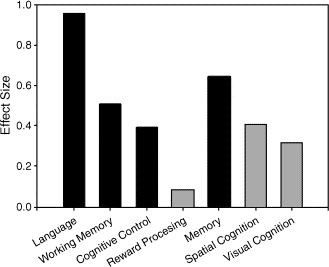
This is the most interesting and relevant flaw - working memory is not the only thing tested by a working-memory test. I’m probably oversimplifying this, but I believe that Liberman's graph suggests language and memory impact working-memory test results more than working memory does.

The bottom line: the working-memory test may actually test one’s comprehension abilities more than it tests working memory, so the test doesn’t do enough to isolate the variable it supposedly tests.

***
For another great example of real-world LSAT logic, check out "Facebook Use Linked To Lower Grades In College." (found via Freakonomics blog post - "Your Brain on Facebook").

In this article, the study's authors do an excellent job of acknowledging their study's limits. How? By raising the potential of a third variable that may lead to Facebook use and to lower grades.

Update: "Facebook Use Does Not Make You Stupid." It just goes to show correlations don't always mean as much as you might think.

LSAT Diaries: The 30-Something Chemist with a Family

LSAT Blog Diary LSAT Studying With FamilyThis installment of LSAT Diaries comes from Jon in Richmond, Virginia. He writes:
I'm a bit of a non-traditional, 32, PhD in chemistry, married, two (little) kids. I work for a Big Pharma company. Oh, and my younger brother is currently in law school. I very much want to beat his LSAT score (161). Well, I really want to crush it.
If you want to be in LSAT Diaries, please email me at LSATUnplugged@gmail.com. (You can be in LSAT Diaries whether you've taken the exam already or not.)

Please leave Jon some encouragement and advice below in the comments!


***

(Quick note: Below, LG=Logic Games, LR=Logical Reasoning, and RC=Reading Comprehension.)

Jon's LSAT Diary:

Day 1:
7:09: Rise and Shine

8:10: The wife and kids are out the door. I toast a Pop-Tart, grab a snack for the kids, pick up my computer bag, and head out myself. My bag is lighter without The Next 10 LSATs book. I finally got a chance to photocopy a couple of games sections. The photocopies are in the bag. I'm going to try to take a couple of ten minute breaks during my day to do a puzzle or two.

5:00: I've been very busy in the lab for the last couple of weeks and today was no different. All morning was spent getting four experiments going. The afternoon was filled with documenting the experiments and attending a meeting that was actually fairly productive. No chance to squeeze in a quick game.

5:10: I took a few minutes to search my email for a message that I have from my brother about his LSAT score. I'm trying to find which test he took. My brother's a 2L at a Boston law school (not Harvard). I have every intention of destroying his LSAT score. I know it's immature, but competition is a good motivator for me. So is shame. He got a 161. I'm aiming for 171+. December 2006. I'll have to find out which PrepTest that is. I plan on taking that test right before my official test in June. He was practicing in the low 170's but only scored a 161? I'll have to ask him about that later.

5:25: I leave work to pick up my two kids and head home for dinner and some family time.

8:50: With the kids in bed and my wife in the garage using our treadmill, I have some time to study. I usually study at the kitchen table, but I'm just not feeling it tonight. I decided to sit in a comfortable chair and review Grouping games. The games are my weakest section in the test. It just takes me too long to to work through them. My chemistry background has trained me to be very deliberate and careful in approaching problems. The time limit's killing me. I've been getting better and am working on improving my pace. I managed to get through a few games.

11:30: I decided to do a quick workout myself instead of getting right to studying after the wife went to bed. Given the progress I made during the early evening, I decide to do Section 1 of PrepTest 34. Ah, reading comprehension (RC). Easily my best section on the test. I whip through it with a minus 2. I'm alright with missing one of them, but I should have gotten the question about the anteaters.

12:20: I decide to call it a night. This is an early night for me.


Day 2:
6:50: My daughter is making sure we get an early start this morning.

8:30: I should have pretty much the same routine at work today. All morning will be at the lab bench with the afternoon full of paperwork. I may be able to find 10 minutes or so to tackle a game.

5:00: I've done all that I need to do today. I'm going to do the first game from PrepTest31. Let's figure out everyone's locker assignments!

5:10: Wow, I zipped through that in 5 minutes. I had done it before, but I didn't really remember it all that well. I'm pleased with how that went.

7:15: I manage to read a few pages of a book about the Seven Days campaign during the Civil War around Richmond, Va while my son is watching Scooby-Doo before heading upstairs to bed. I tell myself I'm doing RC prep.

8:30: I was just sitting down to study when my wife came back in from the garage. She's having some problem with her iPod. It's dead. I wanted a new iPod but it looks like she's going to get one instead. I guess the practice with grouping games will have to wait.

11:30: That's twice. Just as I was getting situated my daughter started crying. I'm at the kitchen table and ready to go again. I'll be really quiet so I don't wake anybody up.

1:00 am: I worked through the grouping game setup exercises and moved onto the first practice game. I have done the PrepTest the game is from already, but the material wasn't too fresh. I made it through the game in about 11 minutes with one stupid mistake. There are 7 or 8 questions so an extra minute or two might not be a real show stopper. It's bedtime.


Day 3:
6:50: This is getting old. I like getting up at 7:10 better.

8:36: My brother's replied to my email about the disparity between his practice LSAT scores and his official score. His story is that some guy next to him was flipping test booklet pages pretty quickly while he was stuck in the same section. He started freaking out that he was going too slow so he started to hurry through his first section (games). It took him a few minutes to remember that the order of the sections aren't the same for everybody. I guess he righted the ship after that, but the damage was already done.

You can only turn the pages a couple of times in the games section, but I guess his mental energies were too focused on the task at hand to realize that. He took the test once before, but he refuses to tell anybody his score. I'm sure that dismal performance was probably on his mind as well.

Noon: I'm going to take the first 15 minutes of my lunch to do game 2 in PrepTest 31, the CD store. I didn't like this game the first time I did it...

12:15: I still don't like it. I just have a hard time managing all of that information. I'm going to stay positive though. I've found something that I'm not good at so that means getting better at it should help my score. I see a good opportunity to to crack a piece of the LSAT code by figuring this one out. That will have to wait for later. I'm hungry.

4:30: I went to a chemistry seminar today. It was pretty boring (surprise), but seeing that I spend pretty much all of my free time on LSAT prep, my mind shifted into that mode during the presentation. I couldn't help but think about how the figures the speaker was using to tell us about his research were similar to games diagrams. Thinking about it during the talk, I realized that I've been so focused on getting the games questions answered in under 35 minutes that I've totally overlooked the key of the section. It's all about understanding how different pieces of information relate to one another.

I was reminded of instances where I've been stuck on a problem at work. I have all of this data in front of me. I know the answer is in the data somewhere, but I just couldn't see it. By changing how I look at the data, the answer I was looking for just jumps out at me. These games are basically the same thing. Once you take those random rules and put them into an order that really makes sense, inferences and question answers are much easier to find. Maybe I can take what I know about how I like to look at problems and add a wrinkle that will improve my score.

5:10: Back at work with a few minutes left until I have to leave to get my kids. There's plenty of time to do game 4 in PrepTest 31, building a partition.

5:25: I worked through this one with an eye to time and did alright, but after I looked at it a second time, I elaborated on one of my diagrams and suddenly all the pieces fell into place. I looked back over the questions and the answers were very easy to find with my improved diagram. I've known that the setup is key, but this example has really shown me that I need to look for ways to make the rules more visual. We'll see if it helps improve my score. Must beat the little bro.

9:30: With the wife in the garage, the kids in bed, and The Office over, I'm back at my study spot, the kitchen table, to work on that CD store game again.

9:50: After flailing around with the arrows in Logic Games and not making much progress, I tried applying my new insight into arranging the game info into a way that helps me see the connections better and get a better sense of how the different rules are connected. I was using the photocopy that I used to do the game earlier in the day so it was all marked up. My previous work was distracting me when I tried to answer the questions. I'll try it again tomorrow night with a new copy. (I need to remember to take "The Next 10" with me to work tomorrow and make some more copies.)

11:30: I'm feeling a little sleepy and my body is tired from the workout that I just finished, but I'll take a crack at a Logical Reasoning (LR) section tonight just to mix things up a little (PrepTest 34 Section 2).

12:30: I should have listened to my gut and gone to bed. I made some very careless mistakes. That's kind of par for the course for me on this section though. I did better back when I first started studying. For whatever reason, I'm not reading the questions and answer options as carefully as I did back then, and I'm really making some stupid mistakes. I went back and looked at one that I missed. I totally skipped the correct answer choice when I was going through them the first time. On another question an assumption in the argument jumped right out at me the second time I read the question, but I totally missed it the first time. I'm going to chalk this -6 performance up to fatigue, but I'm going to take away the lesson that I need to be very deliberate in my reading.

Day 4:
8:05: I'm sure to grab my Next 10 book so I can photocopy some more games for practice. I've decided that's the only thing that will really help me at this point. Practice, practice, practice.

1:15: I had a few things to take care of before I went downstairs to get my experiments up and running again so I'm really behind. I have plenty of other things to do besides run these routine experiments. I need to catch up on some other work, write an abstract for a poster that I plan to present at a national meeting, and get started on a training presentation that will cover some pretty technical information, but getting these experiments going is my top priority everyday. I could work on my abstract or presentation at home in the evening, but I need all the time I can get for studying. Anyway, there is no time to do a game during my lunch.

5:15: I was able to make new copies of a few games. The photocopier is in a lab where only a few people work, all of whom are already out the door. Using the photocopier for non-work purposes isn't why I'm trying to keep people out of my business. I don't want people to start talking about my plans to take the LSAT. Info like that tends to get more distorted the higher up the management ladder it goes. I don't need to deal with rumors right now. I have enough on my plate. These new copies won't be used tonight though. I have other plans for my study time.

10:00: The wife ran out to buy a new iPod, so I decide to take this rare chunk of time in the early evening to do the second LR section of PrepTest 34. I was ruminating about my crappy performance all day so this is my chance to take another crack at an LR section to see if I can improve on my sub-par performance from the night before. It's still pretty early in the evening so I figured I would be a little sharper. I was in the final few difficult questions when my wife got back home. She didn't say anything to me, but I found it harder to concentrate once she was back.

It was another -6 performance. I don't feel like I made any careless mistakes like I did the night before. I actually resisted the temptation to take the trap answer on a couple of questions and worked to the right answer. Nevertheless, it's less than comforting to be stuck in this range. I just keep telling myself that I have plenty of time. Getting over this hump is probably going to be tough so I just have to keep on plugging.

1:00: I pushed the LR frustration back for an hour and a half or so and did a few practice Logic Games. Improving in this section will be the biggest benefit to my score so I need to keep doing what I can to improve. Like I said in this morning's post, practice, practice, practice.


Day 5:
9:00: Today is Saturday and Saturday always starts with a trip out with the family for breakfast followed by our weekly grocery shopping. These trips are usually pretty crazy, remember my kids are 3 and 1 and a half. This morning is no exception. I was up with my daughter for about an hour while we were waiting for some Motrin to kick in to help her with some teething pain. I was up until 1 studying, up with my daughter from 2:30 to 3:30, and up and getting ready for the day at 7:45. I'm should be alright for a little while, but I'm thinking that I'll take a nap while the kids are napping today. I really need the rest. My daughter needs the rest too. She's stubborn on a good day, but she's impossible on a night after she's hasn't slept well. I'm already looking forward to nap time.

12:30: I was falling asleep while I was watching Scooby-Doo with my son before his nap (I used to watch Scooby-Doo when I was his age, it's a strange experience to watch it again with my own kid.). I'm thinking I need to sleep more than I need to do logic games practice.

4:00: Yes, I did need to sleep. Bless my wife for letting me sleep for 3 hours on a Saturday afternoon!

12:00 am: Most of the night has been spent on Daddy duty. My son is getting a bike from the Easter bunny tomorrow and I need to finish putting it together. I'm waiting for the cheap pump that we bought to inflate the tires to cool down from taking care of the front tire before I do the reat tire. I'm tackling the next grouping practice game. It's about researchers learning new languages.


Day 6:
10:45: All day was spent doing family stuff. I'm hoping to do 4 or 5 practice games tonight. I'm planning on doing a timed games section as part of my diary grand finale tomorrow night. Must practice, practice, practice, practice.

12:45: I worked through the last couple grouping games and two grouping/linear combination games. I've discovered that I'm really bad at grouping games where the position of the variables are not defined. I'm not a systematic enough thinker to work through all of the inferences that are the key to that kind of game. Identifying that weakness gives me something very targeted and specific to work on. I have also realized that I take too much time making sure I have the correct answer. I identify an answer that I am confident in, but then I take another minute or two to convince myself that it's correct before moving on to the next one. I'm losing a big chunk of time in that one activity alone. I'll have to pay better attention to that tendency the next time I do a timed section.


Day 7:
8:30: I had a horrible time getting to sleep last night. Right after I feel asleep, my wife woke me up to help her get my daughter settled. I feel asleep holding her in a glider that we keep in her room. I got back in bed around 5. I got 4 fragmented hours of sleep last night. There will be plenty of caffeine in my day. At least I'll be plenty busy at work.

12 pm: I have game 3 from PrepTest 31 in my bag. I know how to do it pretty quickly, but I'm curious to see just how long it will take.

12:10: It took me 5 minutes, and that's after spending way too much time confirming that I had the correct choice identified on one of the questions.

Midnight: I tackled section 4 of PrepTest 31. I am encouraged by my performance. I only missed 2 that I answered and didn't get to 8 of them. This doesn't sound great, but it's an improvement over where I was a month or so ago. The practice is helping. I skipped most of the first game after not being able to make much headway with the questions. When I went back to review the questions I quickly identified that I missed the key rule. I figured everything out pretty quickly after that insight.

I have a good feeling that seeing my mistake will allow me to identify a similar rule in a game that much faster the next time I encounter a similar game. The practice is already helping (I need to make that my mantra for the next couple of weeks). This process of seeing how the rules relate to one another and how to best attack the questions is definitely coming much faster. I could spend 45 minutes trying to figure out one game a few weeks ago. Now I can usually find the key to the game in a minute or two.

You would think my advanced degree (I have a PhD in chemistry) would help me out in this situation, but the way I think about chemistry is much different than the way I have to think about these questions. I am basically training myself to think in an entirely different way. It's definitely a challenge, but I know that I'm up to it. I just have to keep practicing because...The practice is already helping.

As for my pseudo-score on PrepTest 31, a 163. A solid RC section, two alright but could have been better LR sections, and a not so great but better than I've been doing games section. The score is right where I've been for the last couple of PrepTests, but I feel like my grasp of the test is improving. I try not to worry too much about the score at this point. I only calculate it to gauge my progress and to acclimate myself for how the raw score relates to the scaled score. I'll put more value in my score when I start taking four or five sections in a row. I'll probably have to start the test at 10 pm or so some night. I'll wrap up around 12:30. I'm going to take a couple of Saturday afternoons to take a full PrepTest with a fake experimental section, but as this diary shows, I just don't have the luxury of big chunks of time. That's just the reality of my life.

I still need to order PrepTest 51 (that's the test my brother took to get his 161). I know there are plenty of good reasons to study hard, but I am highly motivated by competition. I'll keep practicing whenever I can find the time. Thanks for reading.


***

Steve's comments:

It sounds like you're in great shape to rock the exam, Jon!

1. The desire to beat your brother's LSAT score is a great motivator. As long as it's effective, it doesn't matter whether the motivation is immature or not.

2. Do yourself a favor and don't study with the TV on. Set aside specific blocks of time to do nothing but study. Studying with the TV. Reminds me of when I used to do my math homework in rapid 3-minute spurts during commercial breaks. It would take a while just to get back into the homework mindset, and before I knew it, the show was on again, and I'd hardly gotten any work done.

3. Also try not to study when you're exhausted. Better to study when you're awake and alert - you'll get more out of your studying that way.

4. Glad to see you're starting to make sense of the Logic Games!

5. It's great to photocopy the logic games and do them several times. You might make new deductions the 3rd or 4th time around.

6. Identifying weaknesses is key. You will learn to become a systematic thinker through practice.

Everyone, please leave Jon some comments and encouragement below!

Photo by sterlic

Law School Rankings Released by US News

The US News law school rankings for this year were officially published online on Thursday, even though they were leaked a few days ago. It's good to be aware of them, but take them with a grain of salt.

A few articles accompanying the rankings on the US News site:

"Law School Rankings Methodology"

"Part-Time Law School Rankings Methodology"

"Attractions of Part-Time Law School"

"How to Use Our Lists Wisely"

"FAQ Law School Rankings"

Analysis:
Law School Almanac created an excellent chart showing changes in the US News rankings of the top 14 law schools from 1987-2009.

Wall Street Journal Law Blog discusses some changes to the rankers' methodology.

Law Librarian Blog links to a few useful posts about law schools' reputational scores and the biggest rank changes.

TaxProf Blog covers a few potential errors in the rankings.

Finally, LawSchoolHeadlines (defunct) did the legwork to calculate ALL changes in the top 100 law school rankings from last year:

Rank School +/-
1 Yale
2 Harvard
3 Stanford -1
4 Columbia
5 NYU
6 Berkeley
6 Chicago +1
8 Penn -1
9 Michigan
10 Duke +2
10 Northwestern -1
10 UVA -1
13 Cornell -1
14 GULC
15 UCLA +1
15 Texas +1
17 Vanderbilt -2
18 USC
19 WUSTL
20 BU +1
20 Emory +2
20 Minnesota +2
23 IU - Bloomington +13
23 Illinois +4
23 Notre Dame -1
26 BC
26 Iowa +1
28 William and Mary +2
28 GWU -8
30 Fordham -3
30 Alabama +2
30 UNC +8
30 U of Washington
30 Washington and Lee -5
35 OSU -3
35 UC - Davis +9
35 Georgia -3
35 Wisconsin-Madison +1
39 UC - Hastings -1
40 Wake Forest +2
41 BYU +5
41 GMU -3
43 Arizona -8
43 Maryland -1
45 American +1
45 Tulane -1
45 CU - Boulder -13
45 Utah +6
49 SMU -3
49 Cardozo +6
51 U of Florida -5
52 Florida State +3
52 U of Cincinnati
52 Uconn -6
55 Arizona State -3
55 Case Western +8
55 Pepperdine +4
55 Kentucky +4
59 Houston -4
59 Tennessee -7
61 Brooklyn +2
61 Lewis & Clark +12
61 San Diego +21
61 Villanova +7
65 Baylor -10
65 Georgia State +12
65 Penn State +12
65 Temple -6
65 U of Kansas +8
65 U of Missouri -6
71 Loyola LA -8
71 Miami +11
71 Oklahoma -3
71 Pitt +2
75 Louisiana State +13
75 UNLV +13
77 Chicago-Kent -11
77 Rutgers Camden
77 Seattle +5
77 Seton Hall -11
77 Denver +11
77 New Mexico -9
77 Oregon +5
77 Richmond -9
85 Santa Clara -8
85 SUNY-Buff +15
87 DePaul +1
87 Indiana-Indianapolis -19
87 Loyola Chicago -5
87 Marquette +8
87 Rutgers Newark -10
87 St. John’s +1
87 South Carolina +8
94 Catholic -6
94 Northeastern -6
94 St Louis +1
94 Arkansas Fayetteville NEW
98 Louisville +2
98 USF NEW
100 Gonzaga NEW
100 Hofstra -1
100 UMaine NEW

The top 10 part-time law schools are below: (full list here)

1. GULC
2. GW
3. Fordham
4. American
5. GMU
6. Maryland
7. Temple
7. San Diego
9. Denver
10. Chicago Kent

Why the LSAT is Like Monopoly

Think board games and Logic Games have nothing in common? At first glance, sure. However, some of the strategies that can help you win in Monopoly can also help you beat the LSAT.

1. Mediterranean and Baltic almost aren't even worth buying.

It takes money to make money. It's great to study for the LSAT, but only studying a few minutes each day is barely even worth your time. The LSAT's an all-or-nothing deal. Go for the most expensive properties possible (spend as much time studying as possible) in order to reap the biggest reward (a high LSAT score).

Similarly, it's great to buy LSAT materials (properties), but if you don't study intensively (build houses or hotels on your properties), their value will always be limited. The best LSAT prep books increase in value to you when you "upgrade" them by learning what they contain.


2. The more railroads you buy, the better a return you collect from each one.

Studying for Reading Comp will help you with Logical Reasoning, and vice-versa. The more studying you do, the more it increases the benefit of your previous studying. Things start to click.


3. Everyone begins Monopoly with the same $1500. It's how you use that money that makes all the difference.

Sure, there are a few rolls of the dice on the LSAT too - you might get sick or have a noisy test center. However, everyone has 35 minutes per section on the LSAT. It's how you use your time that makes all the difference, and you need a refined strategy in order to succeed. The time you devote to studying, the strategies you use, and your familiarity with the LSAT determine how you'll do on test day.