The LSAT Curve | Test-Equating at LSAC

LSAT Bell CurveThis post is Part 1 of the "The LSAT Curve" series of blog posts. Click here for links to each part of the series.

There's a lot of confusion about the LSAT's curve. The LSAT is not actually scored to a curve, but most test-takers think it is.

This series is my effort to explain LSAC's process of test-equating, raw score conversions, percentiles, and why the test isn't actually curved. Because I dislike statistics (and because most of you probably do also), this blog post involves very little math. However, it might involve some thinking.

You've been warned.

LSAC's Associate Director of Psychometric Research, Lynda Reese, recently wrote the following to one test-taker who asked about the curve (I've added the links):
[T]he LSAT is not graded to a curve...Rather, for every form of the LSAT, a statistical process called test equating is carried out to adjust for minor differences in difficulty between different forms of the test. Specifically, the item response theory (IRT) true score equating method is applied to convert raw scores (the number correct) for each administration to a common 120 to 180 scale. A detailed description of this methodology can be found in...Applications of Item Response Theory to Practical Testing Problems...The equating process assures that a particular LSAT scaled score reflects the same level of ability regardless of the ability level of others who tested on the same day or any slight differences in difficulty between different forms of the test. That is, the equating process assures that LSAT scores are comparable, regardless of the administration at which they are earned.
I'm not a psychometrics expert, but I decided to go ahead and learn more about how LSAC constructs the exam and ensures different PrepTests are of relatively equal difficulty.

I looked up the book Ms. Reese referenced (and believe me, it wasn't exactly a walk in the park).

The following is my understanding of how LSAC creates each LSAT and goes about the test-equating process. Feel free to leave questions and comments, especially if you have a decent understanding of statistics, psychometrics, etc. LSAC's also welcome to leave comments. They haven't commented on the blog yet, but the door's always open.

If you're new to the LSAT, see the LSAT FAQ for more on the basics before getting into all the details.

If you're not new to the LSAT, read on, starting with these definitions of basic terms and concepts:

Conversion Chart: Chart at the end of each PrepTest that helps you translate a raw score into a score out of 180

Percentile: The percentage of test-takers whose scores fall below yours. If you score in the 50th percentile, you scored higher than half of all test-takers. If you score in the 97th percentile, you scored higher than 97% of all test-takers.

PrepTest: Previously administered and released LSAT exam

Psychometrics: The study of psychological measurements. As far as we're concerned, it's the "science" of standardized testing.

Raw Score: The number of questions you answer correctly on the LSAT

Test-equating/Pre-equating: "a statistical method used to adjust for minor fluctuations in the difficulty of different test forms so that a test taker is neither advantaged nor disadvantaged by the particular form that is given" - LSAC (PDF).

Test form: A particular LSAT exam

Scores have to be meaningful and consistent
The LSAT is a standardized exam. This means that a 160 on the Feb 2010 LSAT should be equivalent to a 160 on the June 2010 LSAT, which should be equivalent to a 160 on the October 2010 LSAT, etc. Law schools can't be bothered to look at particular Logic Games, Logical Reasoning, and Reading Comprehension on various exams to see if students with identical scores actually performed at different levels. They can't bother to look at test-takers' raw scores. That's why they have equated numerical scores out of 180, after all.

Administering the same questions over and over wouldn't work
One theoretical (and stupid) way to ensure that all scores were equal would be to create only one LSAT PrepTest and administer it over and over. This would ensure that all test-takers were treated equally and that the "raw score conversions" were always fair. However, this ignores the fact that test-takers would share information with each other.

People who took the February 2010 LSAT would give/sell info about questions that appeared to test-takers who took it in June 2010, etc. Under such a system, the later one took the exam, the more inflated his/her score would be, on average. Thus, LSAC can't just keep giving the exact same questions exam after exam.

For this reason, LSAC needs to create different exams for each released test administration and make them of relatively equal difficulty. A 160 on one LSAT (aka "test form") needs to be equivalent to a 160 on any other LSAT.

***

Read on for Part 2: Why the LSAT Isn't Scored on a Curve: Myth and Fact

Photo by hname / CC BY 2.0

Why the LSAT Isn't Scored on a Curve: Myth and Fact

LSAT Blog Why Not CurveThis post is Part 2 of the "The LSAT Curve" series. The series starts with The LSAT Curve | Test-Equating at LSAC.

Myth: The LSAT is curved
solely on how everyone does that day.

A lot of test-takers believe that the LSAT is "curved", meaning that you should try to figure out which month's exam will have the greatest percentage of low-scorers and take it with them.

The idea goes:

-If you take the same LSAT as a lot of lower-scorers, you'll look better than you would have otherwise (by comparison) and get a higher score as a result.

-For this reason, you should sabotage your fellow test-takers. Lace their food with laxatives, steal their prep books in the library, etc. Anything to get a leg up on them.

Unfortunately for the dishonest and sneaky among you, LSAC can't just compare all test-takers who took the February 2010 LSAT with each other and have that be it.

Why?

Perhaps February test-takers don't adequately represent LSAT-takers as a whole.


Fact: Different pools of test-takers might perform differently.

Let's assume for a moment that, on average, February test-takers answer fewer questions correctly than the theoretical "average test-taker" would on any other exam. If this were true, the average test-taker would get a higher score than he/she deserves by taking the LSAT in February (all other things being equal).

LSAC can't allow this to happen. If it did, then a 160 on the February 2010 LSAT would be easier for the average test-taker to achieve than a 160 on the June 2010 LSAT, and the 160s would not, therefore, be "equal." Whether the average test-taker intentionally (and foolishly) took the February LSAT with the purpose of being compared to a lower-scoring pool is less important than the results. LSAT scores would not mean as much. They wouldn't be as reliable because one would have to consider the context in which the exam was taken.

For this reason, and due to the fact that there are minor differences in difficulty between exams, scores are not simply curved based on each "test form" in isolation.

The magic solution?

Test-equating.

***

Read on for Part 3: The Experimental Section and Difficulty of LSAT Questions

Photo by petereed / CC BY-NC 2.0

LSAT Diary: Law School Visit, TV, and Distractions

Law and Order LSAT BlogRosemary's first LSAT Diary gave some tips on getting started with LSAT studying. In this week's LSAT Diary, Rosemary deals with the distraction of watching TV, finds a study space, and visits her first-choice law school.

If you want to be in LSAT Diaries, please email me at LSATUnplugged@gmail.com. (You can be in LSAT Diaries whether you've taken the exam already or not.)


Rosemary's 2nd LSAT Diary
Studying this week has gotten off to a slow start but I’m starting to recognize my limitations and address them.

I’m a TV addict. I can’t tell you the countless hours I have spent mindlessly flipping through 150 channels only to end up watching Law and Order reruns. Seriously - they're on all hours of the day and night! Take for example, last Saturday, when I found myself caught up in a three-hour Buffy the Vampire Slayer marathon. Unless the LSAC starts asking questions about how to simultaneously kill three vampires, this was a colossal waste of an afternoon.

My solution has been to program my DVR for exactly 4 hours of television viewing pleasure per week. This way I can watch my favorite shows at a time that’s better conducive to my study schedule, and I turn the television off as soon as the show is over. After all, this is the last season of Lost and I need to know what happens each week!

As much as I love studying at home and having easy access to the fridge, if I’m going to get serious this time I have to leave my humble abode and head to the library. Sometimes students need to treat studying like a full time job and commit to specific time schedules for studying or researching. By going to the library, I’m free of distractions and can focus on the task at hand. This is especially true on the days when I have 6 or 7 reading comprehension passages to go through and I can think of a 1001 things I’d rather be doing instead.

The highlight of my week was visiting my first-choice law school school. I got the chance to sit in on a property class, have a tour of the school with a 3L, and sit down one on one with an admissions counselor. If you haven’t visited a law school before, I highly encourage it! The property class was really interesting and dispelled any fears I had about the Socratic Method. The student tour was great because I found out about student employment on campus, daily study habits, and student housing - things you don't find in brochures on the school website.

The best part was sitting down with the admissions counselor. I really got a feel for what type of student they were looking for and I found out the personal statement carries more weight then I originally thought. I left the school energized knowing I really wanted to go there and that by studying hard for the LSAT would just mean I am one step closer!

Photo by finn / CC BY-NC-SA 2.0

Simugator LSAT Proctor DVD Review

Simugator LSAT Proctor DVD Review*Update: Free LSAT Proctor mp3 Available*

No matter how much I write about preparing for LSAT Test Day, people still want tips and strategies for dealing with Test Day nerves.

And there are companies that make products to help people deal with those nerves.

No, I'm not talking about the pharmaceutical industry.

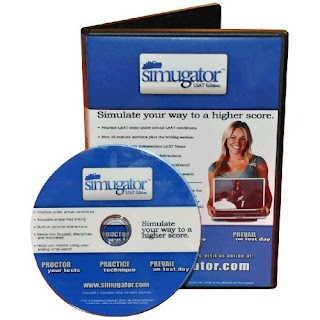
I'm talking about the Simugator LSAT Proctor DVD (alternate link / other alternate link).

The DVD simulates what it's like to take the LSAT on Test Day. It contains a video of a classroom where a bunch of people pretend to take the LSAT, and someone attractive pretends to proctor it. It's meant to help you get used to the distractions of taking the LSAT around other people - the proctors and other test-takers. (Perhaps having a hot proctor is intended to be part of the distraction.)

You pop it into your computer or DVD player when you're ready to take a timed full-length practice exam (or section).

The videocamera's set up so that you're facing the proctor and are surrounded by fellow test-takers. The proctor on the DVD gives a 5-minute warning and moves from one section to another without a break, just like the real thing. (Of course, you still get a 15-minute break between sections 3 and 4.)

The DVD has a "Distractions Mode" setting where they increase the annoyingness of the other "test-takers" and "proctor" to help you get used to what you might face on Test Day.

Just like a fighter pilot might use a simulator to practice, this DVD allows you to simulate the Test Day experience.

Does this DVD give you anything you can't get from a friend or a public place? At first glance, not really, but it does have some unique benefits - primarily, the fact that it offers test proctoring "on-demand."


Alternatives to the LSAT Proctor DVD:

Friend
You can have a friend proctor you, and it might be a little more real, but your friend might not always be available, and he/she probably isn't going to proctor dozens of PrepTests without asking for favors in return. Or maybe you don't have any friends.


Library / Starbucks
You can take your practice tests in a slightly distracting and noisy setting like a library or Starbucks, but maybe you're too lazy or those settings are too distracting and noisy. Or maybe you live in a part of the U.S. / the world that doesn't have places like libraries or Starbucks. However, even if you do live near a library or Starbucks, they're not open 24/7, and they don't always have seating available. A librarian or barista isn't likely to proctor your exam and call out a 5-minute warning.


Free LSAT Diagnostic Tests From Prep Companies
Many prep companies offer a free LSAT diagnostic test in a crowded room. This is as close as you can get to an actual LSAT experience. I recommend going to as many of these as possible in the month leading up to your test date. You can bring your own PrepTest and take it instead of using the one they give out. The prep companies don't mind. The downside of this option is that the diagnostics may not be offered frequently enough, and they may not be on your schedule.


So, should you get the LSAT Proctor DVD?
This DVD isn't for everyone. However, it might help you feel like you've been through the "experience" of taking several practice LSATs under test-like conditions.

Coming soon:

For $1000, your future LSAT proctor will come to your house and proctor a practice LSAT for you. He/she will also bring 20 friends to make noise and seduce you while you take your practice tests.

LSAT Test Dates in 2010 and 2011 | Change From Previous Years

LSAT Blog Test Dates ChangeLSAC has made the October 2010, December 2010, and February 2011 LSAT test dates a week later than they normally would've been (compared to test dates in previous years). The June 2010 LSAT's test date (June 7) remains the same, though.

(This is a little ironic since the June test date doesn't matter nearly as much, given that applicants can't start applying until the fall).

I'm including historical and current LSAT test dates at the end of this blog post to give you a sense of the shift.

Why This All Matters:

For June Test-Takers
This gives June test-takers the opportunity to submit their applications to some schools as much as 8.5 weeks earlier than October test-takers. June test-takers have never had this great an advantage over October LSAT-takers when it comes to timing.

For October/December Test-Takers
October test-takers can still apply relatively early in the cycle, but every week counts. It's especially important for October/December test-takers to get their applications together while waiting for the LSAT score. Submit everything the moment the score comes back.

For February Test-Takers
Taking the LSAT this late in the cycle was less than ideal already, so you really didn't need it to be a week later. When the LSAT test date moving a week later, the score release date also moves a week later. The February 2011 LSAT's scheduled release date is March 7th, 2011. Even though LSAC generally releases scores a few days early, they don't release February LSAT scores a full week early.

The especially-bad news - some law schools have March 1st application deadlines.

This means a February 2011 LSAT score won't do you any good for that cycle if your desired law school has a March 1st deadline. You need to look into your particular law school's application deadlines to determine this sooner rather than later.

If you're set on applying this cycle (and especially if your school has a March 1st deadline), I'd recommend taking the LSAT in June or October to give yourself another test (October or December, respectively) to fall back on.

The February LSAT's always been late, and now it's even later.


Evidence - LSAT Test Administration Dates Over Time:

June Test Dates

Monday, June 6, 2005
Monday, June 12, 2006
Monday, June 11, 2007
Monday, June 16, 2008
Monday, June 8, 2009
Monday, June 7, 2010


September / October Test Dates
Saturday, October 2, 2004
Saturday, October 1, 2005
Saturday, September 30, 2006
Saturday, September 29, 2007
Saturday, October 4, 2008
Saturday, September 26, 2009
Saturday, October 9, 2010


December Test Dates
Saturday, December 4, 2004
Saturday, December 3, 2005
Saturday, December 2, 2006
Saturday, December 1, 2007
Saturday, December 6, 2008
Saturday, December 5, 2009
Saturday, December 11, 2010


February Test Dates
Saturday, February 12, 2005
Saturday, February 4, 2006
Saturday, February 10, 2007
Saturday, February 2, 2008
Saturday, February 7, 2009
Saturday, February 6, 2010
Saturday, February 12, 2011


Photo by spursfan_ace

Deciding to Take June vs October LSAT | Pros and Cons

LSAT Blog Decide June OctoberI've already covered the benefits of taking the June LSAT instead of the February LSAT.

Generally speaking, I also believe it's better to take June LSAT than it is to take the October and December LSATs (for admissions-related reasons).

(This post is based upon the assumption that you're taking the LSAT less than a year before you intend to apply to law school. If you're planning way ahead, this won't apply to you.)

Benefits of taking the June LSAT
  • It's better for your law school admissions chances because it allows you to apply at the beginning of the admissions cycle. Law schools typically begin accepting applications September 1, September 15, October 1, or October 15. Applying at the beginning of the cycle is especially important for top law schools.
  • You can be done with the LSAT sooner. If the June LSAT goes well, you can be done with it for good and relax this summer.
  • You have more chances to retake. If the June LSAT doesn't go well (or if you're sick, have a family issue, someone vomits on you during the test, etc.) and you have to retake, you can retake in October and still apply relatively early in the cycle.
  • The June LSAT is the only LSAT offered in the afternoon. No need to get on an early sleep schedule. If you take it outside a city, you may not have to go to the trouble of sleeping away from home the night before.
  • The June LSAT is the only LSAT offered on a Monday. Normally, Sabbath observers have to take the LSAT on a different date than everyone else, and LSAC does not release Sabbath tests (scroll to bottom). This means Sabbath test-takers never get to see their exam booklet and answer sheet. However, because the regular June LSAT is on a Monday, all test-takers (except those outside North America) get to see their exam booklet and answer sheet. This is useful for planning a retake.

Benefits of taking the October LSAT
  • Maybe you like getting up super-early, and the afternoon is too late for you to think.
  • You don't have to (seriously) begin your studying now.
  • Additionally, if you're a college student, consider:
* The June LSAT is offered soon after most schools' final exams typically end. You might not want to divide your attention between finals and LSAT studying in April and May.

* The October LSAT allows you the entire summer to study without being distracted by schoolwork (if you don't take summer classes). You still have to get through the first 1.5 months of the semester or so, but things probably won't be too intense that early in the semester. If you use the summer wisely, you can get through the vast majority of your LSAT studying then.

***

What do you all think? What's impacting your decision re: June vs. October?

Photo by asmythie / CC BY-NC-SA 2.0

LSAT Diaries: The 20-Something Receptionist

LSAT Blog DiaryThis installment of LSAT Diaries comes from Rosemary, a 28-year-old receptionist in Washington, D.C. She has some great advice below on getting started with your LSAT prep.

If you want to be in LSAT Diaries, please email me at LSATUnplugged@gmail.com. (You can be in LSAT Diaries whether you've taken the exam already or not.)

Leave Rosemary some encouragement below in the comments!


Rosemary's LSAT Diary:

I have a confession to make...I'm a test retaker. Yep, that's right. Once wasn't enough, so I'm studying for the LSAT again. Sure, I’m not happy to be in this position, but this time around I have a better idea of what I’m getting into and the time commitment that studying for the LSAT entails.

So what went wrong? Honestly I was naïve about the time commitment needed to prepare for the test. I took a well-known prep course and attended all the class sessions, but I didn’t do the homework outside of class. After 15 weeks, my test scores barely budged. By the time I realized my predicament it was too late to change dates, and I had to choose between not showing up for my test or canceling the score. I chose to cancel the score basically because I could experience the test-taking process first hand, which would hopefully help me when I retook the test.

I don’t like the position that I’m in, but my previous experience has made me more determined to take the time to prepare so that I can retake this test in 4 months and move on with my life.

This time around I know that I need to be better prepared from the beginning and the first step is developing a study schedule that fits my life. I’m currently in my last 6 weeks towards my bachelors, taking 2 evening classes while working full time. Since this week I needed to focus on midterms, I decided to get some of the housekeeping out of the way, so I can get off to a good start the first week.

1. Make a study schedule.

I’m using Steve’s 4-month LSAT study plan as a template and making adjustments as needed. I’m using a calendar I can access from my phone and home in order to keep track of the assignments I have each week. Because I still have 6 more weeks of schoolwork, having a master calendar allows me to balance my LSAT study schedule with upcoming papers and exams.


2. Define a study space.

Everything I’ve heard about studying for the LSAT says that it’s best to study in an atmosphere as close to your actual testing experience as possible. I know from past experience that my test site conducts the tests in large lecture halls with tables. I dug out my LSAT prep books, both the ones recommended by Steve along with the practice books I used from my prep course, and set up my dining room as my LSAT zone.


3. Register for the LSAT.

There are only two locations in my area that administer the test and if both of those locations fill up the next closest test site is 200 miles away. So because I like to always be on the safe side I took five minutes out of my day to register and pay for the LSAT at the same testing site that I took the test at last year.

Photo by bdorfman

Best LSAT Prep Books Recommendations

I already have a big list of LSAT prep book recommendations. That list contains what I consider to be the absolute best LSAT prep books.

I also recommend that you get as many real LSAT PrepTests as possible.

However, test-takers often ask me which prep books are absolutely necessary in order to do well. It's an understandable question, since LSAT prep books can get expensive and time is often very limited.

The truth is, you'll need a lot of books, and they're not always cheap.

Keeping in mind you may be under time / money constraints, I've made a concise list of the books I consider absolutely essential for the average test-taker's LSAT prep:

I've reviewed all of the following in my other Best LSAT Prep Books Recommendations post. The below are just a few of my recommendations.


LSAT Study Schedules / Plans / Guides

I've created a variety of week-by-week and day-by-day LSAT study schedules to help guide you during your LSAT prep. If you're looking for specific guidance on structuring your LSAT prep and using the LSAT prep books available, get one of the day-by-day plans.


LSAT PrepTest Explanations

Because LSAT PrepTests don't typically come with any kind of explanations, I've assembled LSAT PrepTest explanations for the vast majority of LSAT PrepTests. Get the ones covering areas where you have particular difficulty (Logic Games, Logical Reasoning, or Reading Comprehension).


20 LSAT PrepTests

If money's your major issue, these exams should be the 10 most recent LSAT PrepTests and The Next 10 Actual, Official LSAT PrepTests.

If time's your major issue, these exams should be just the 20 most recent LSAT PrepTests.

Whichever 20 PrepTests you purchase, you should make the older 10 the ones you use for learning purposes, and make the newer 10 the ones you use for full-length practice tests.


Free PDFs

Aside from including the book recommendations in my Best LSAT Prep Books blog post, here are two free LSAT PDFs on LSAC's website. They are:

Sample LSAT Questions and Explanations (PDF)

June 2007 LSAT - Sample LSAT PrepTest (PDF)


***

I want to emphasize that I'm not suggesting that you use only these books instead of the ones in my other best LSAT prep books recommendations post (or in my LSAT study schedules). Those contain what I consider the ideal LSAT prep book shopping lists.

This blog post is for people who are skipping meals and turning tricks to pay for their prep books (or for people working insane hours with incredibly-limited study time).

If you're not one of those people, but you think LSAT prep books are too expensive, consider how much a top LSAT score is worth. Then consider the worth of a night out on the town you'll barely remember the next day.

You'll have plenty of money for bottle service at the club and fancy dinners when you're a big-shot attorney (or after you find a rich sugar daddy/momma while you're saving the world).


June 2010 LSAT Questions and Answers

LSAT Blog June 2010 Questions AnswersThe June 2010 LSAT might seem far off, but it'll be here before you know it. What would you like to see on the blog between now and then?

Please leave your questions for me (and for each other) in the comments, I'll do my best to answer as many of your questions as possible between now and June 7th.

Quick request: please leave a name rather than posting as "Anonymous." It makes it easier for everyone to respond to specific comments. Thanks!

***

Also see previous Questions and Answers posts.


Photo by -bast- / CC BY 2.0

LSAT Test-Taker Survey

LSAT Blog Test Taker SurveyI asked the following questions to some blog readers who recently took the LSAT:

What do you know now that you wish you'd known before starting your LSAT prep? What would you have done differently?

Here are their responses:

-I wish I hadn't focused exclusively on the LSAT. My one track mind had a detrimental impact on other parts of the application preparation (getting recommendation letters). I also wouldn't have taken 2 consecutive days off [the week before]. It negated progress to some extent.

-I think your recommendations prepared me very well. The most important thing I learned was to take a lot of practice tests, and that it's all about timing.

-I wish I had started taking timed tests sooner. I only did them in the last two weeks and it was definitely not enough.

-I wish I knew how much harder the newer LSATs are--at least in terms of the curve. I also would have prepared better for reading comp. The newer passages seem to take a lot longer to get through.

-Your LSAT book recommendations! if I had known about them a year ago I could have saved a lot of money on Kaplan classes.

-I took the LSAT twice, but the second time I wasn't sure how much to study. I think it might helpful to set up a schedule for retakers who experience LSAT burn-out the first time from too much prep but who still want to adequately prepare for the second testing.

-I would have approached it less as a "general intelligence" test and more of a set of skills to master, particularly the logic games. I don't know if that would have changed how I prepared, but it would have been a different mindset. I did not take a prep course and still would not have chosen to do so.

-The typical burnout timescale. It freaked me out and almost broke me down until I talked to some other LSAT studiers who happened to be experiencing the same thing at the same time. I wish I would have known it was coming so I could have just pushed through it knowing there was light at the end of the tunnel instead of wasting valuable time freaking out.

-not get stuck on one problem in my logic games lol. I still think about that now. I got stuck on my 3rd game, the colors and toy dinosaurs, remember mauve lol. Anyway, my strategy was to focus on reading comp and games since those were my strongest areas and less on reasoning. I wish I would have know the LSAT will get you distracted on a question to prevent many from getting to the easier questions, like the 4th game with 7 questions.

-I wish I'd known the position of the experimental section. It would've helped prepare me better for a shocker first section on the February LSAT.

-started earlier and read your blog sooner!

***

If you've taken the LSAT before (or have been prepping for a while), how would you answer those questions?

Leave your thoughts in the comments!

Photo by lwr / CC BY-NC-SA 2.0

LSAT Logic: Neither Necessary Nor Sufficient

Frequent Showers LSAT BlogSometimes test-takers get so wrapped up in formal logic and necessary/sufficient conditions that they forget something very important.

Some things in the world are neither necessary nor sufficient.

Take the relationship between frequent showering and kissing, for example. (Yes, it's a cutesy PG-rated example. Deal with it.)

Let's assume that:

Evidence #1: Some people are rich and/or famous enough that they could get a lots of kisses without showering frequently.

Evidence #2: However, other people shower all the time but still don't get lots of kisses.

Conclusion: Showering frequently doesn't help one get kisses.

The above conclusion is invalid.

The first piece of evidence tells us showering frequently is not necessary to get kisses.

The second piece of evidence tells us showering frequently is not sufficient to get kisses.

So, we've learned showering frequently is neither necessary or sufficient to get kisses. Does this mean showering frequently has no impact on kiss-getting? Of course not.

Showering frequently can help one get kisses without being enough to get kisses. For example, being good-looking probably helps.

Now look at the following two questions from real LSAT PrepTests:

PrepTest 32 (October 2000), Section 1, Question 11 (page 121 in Next 10)
PrepTest 38 (October 2002), Section 4, Question 21 (page 347 in Next 10)

It's worth noting that the first of these two questions (PT32) is not a flaw question. It's simply recognizing the same point as the showering example above and the question in PT38. We could easily turn the PT32 question into a flaw question by adding the following sentence to the end of the stimulus:

"Therefore, prior experience in foreign affairs does not promote successful foreign policy."

We could then accuse the argument of "failing to consider the possibility that prior experience in foreign policy promotes successful foreign policy without being necessary or sufficient alone to guarantee it."

Photo by stevendepolo / CC BY 2.0

Law School Admissions Workshops Online

LSAT Blog Law School Admissions Webinar GameI've previously interviewed law school admission consultant Ann Levine about The Law School Admission Game, her book on law school admissions. Ann's also shared some general law school admission advice on LSAT Blog in the past.

Ann recently announced she's hosting a series of "webinars" called “Learning the Rules of the Law School Admission Game.” (For the eldery/non-tech-savvy among you, webinars are like seminars or workshops, but over the web). Ann's webinars aren't free, but they're not a fortune, either.

If you're applying to law school in Fall 2011, these webinars look like a great opportunity to learn a bit more about the process, to ask your admissions-related questions, and to ask Ann to elaborate on anything in her book, The Law School Admission Game.

Photo by 41626461@N06 / CC BY-ND 2.0

4-Month LSAT Study Plan / Schedule

Also see the 4-Month LSAT Study Schedule: Premium Day-By-Day Version.

4 months is PLENTY of time if you stick with a regular, but moderate, schedule. I've reviewed all books and PrepTests mentioned below in my best LSAT prep books recommendations post.

This schedule is intense. Follow it only if you're studying for the LSAT full-time, or if you're able to study for several hours each weekend. You might have work/school/life obligations that make this impossible. If that's the case, skip some of the "re-do" and "review" weeks, and complete the rest at a more relaxed pace.

Month 1:

Review my relevant articles on Logic Games and complete this list of Logic Games from PrepTests 52-61 ordered by difficulty during the first 4 weeks.

Week 1: Complete Pure Sequencing, Basic Linear, and Advanced Linear games. Review each game that gives you trouble.

Week 2: Complete Grouping: In-Out / Selection, Grouping: Splitting, and Grouping: Matching games. Review each game that gives you trouble.

Week 3: Complete Combination games. Review each game that gives you trouble. Then complete any Logic Games in older exams of the types that give you difficulty. Complete a few sections of Logic Games under timed conditions, and read A Rulebook For Arguments.

Week 4: Review my articles on Logical Reasoning before completing LSAT questions of each type in PrepTests 52-61 using the LSAT Logical Reasoning spreadsheet (untimed). Complete a few timed sections of Logic Games.


Month 2:
Week 5: Continue Logical Reasoning work from Week 4 with additional question-types and complete a few timed sections of Logic Games.

Week 6: Continue Logical Reasoning work from Week 4 with additional question-types and complete a few timed sections of Logic Games and Logical Reasoning.

Week 7: Continue Logical Reasoning work from Week 4 with additional question-types and complete a few timed sections of Logic Games and Logical Reasoning.

Week 8: Review my articles on Reading Comprehension and complete several sections of Reading Comp from PrepTests 52-61 (untimed). Complete a few sections of Logic Games, Logical Reasoning, and Reading Comprehension under timed conditions.


Month 3:
Week 9: Catch-up and review week. Re-do the Linear / Sequencing games from PrepTests 52-61, then re-do the Grouping and Combination games from PrepTests 52-61. Try to solve them more quickly and make new inferences.

Week 10: Complete the 3 tests in LSAC's SuperPrep (timed) and review the explanations. Although the explanations are technical, it's good to learn how the test-makers think. Identify weak areas.

Week 11: Re-read my articles on Logic Games and Logical Reasoning about question-types still giving you trouble. Use my Logic Games categorizations and/or Logical Reasoning spreadsheet to do question-types in older exams that still give you difficulty. Complete a recent LSAT PrepTest under timed conditions. Review.

Week 12: Complete 3 recent LSAT PrepTests under timed conditions.

Month 4:
Week 13: Complete 3 recent LSAT PrepTests (timed). Splice in sections from another to simulate experimental sections. Review each exam on alternating days.

For the remaining weeks, use these free Logic Games Explanations, these video explanations, and these other LSAT explanations after completing the relevant exam.

Week 14: Complete another 3 recent LSAT PrepTests (timed). Splice in sections from another to simulate experimental sections. Review each exam on alternating days.

Week 15: Complete 3 recent LSAT PrepTests (timed). Splice in sections from another to simulate experimental sections. Consider using one section to create a 6-section exam for extra practice. Review each exam on alternating days.

Week 16: Complete 3 recent LSAT PrepTests (timed). Splice in sections from another to simulate experimental sections. (Again, consider using one section to create a 6-section exam). More thoughts on how to simulate the experimental section in this this article. Review each exam on alternating days.

Finally, rock the LSAT on Test Day.

***

Also check out my other sample LSAT study schedules and plans.

LSAT Grouped by Logic Game Type Book

LSAT Grouped by Game TypeFor those of you who intend to complete every LSAT Logic Game ever published, there's a book for you. It's called:

Grouped by Game Type: LSAT Analytical Reasoning: The Complete Collection of Actual, Official Logic Games from PrepTests 1-20

This book is incredibly useful for two major reasons (which the title makes obvious):

Reason #1: Grouped by Game Type compiles all the games from PrepTests 1-20 for you in one book, saving you the trouble of getting all the separate books you'd need if you wanted every Logic Game from these exams. 10 Actual, Official, LSAT PrepTests only contains 7, 9-16, and 18. It lacks PrepTests 1-6, 8, and 17. You can still get those, though. (19 and 20 are in 10 More Actual Official LSAT PrepTests.)

Reason #2: Grouped by Game Type organizes Logic Games by the type of Logic Game, rather than putting them in order by PrepTest (as the traditional books of PrepTests from LSAC do). It divides them into different "chapters" based upon the type of Logic Game. This makes sense because these exams are so old (June 1991 - October 1996) that you'll want to take them in pieces, rather than as full timed exams.

***

While this book is a great concept, there are two minor (and related) reasons that may mean this book isn't for you:

Reason #1: Some types of Logic Games in these older exams are on the less-relevant side. I'm particularly talking about the games included in Chapter 5 (Diagram Games) and 6 (Pattern Games). If your time is limited, you may be better off focusing on newer Logic Games because the types of Logic Games included on the LSAT have evolved a bit over time.

Reason #2: The book categorizes some Logic Games that have no ordering or ranking component under the category of Linear: Assignment. In my opinion, these particular games should be under the category of Grouping: Matching. Additionally, it includes some Linear games with a vertical setup under Linear: Stacked, where it also includes Advanced Linear games. To be fair, however, some of the older Logic Games are on the wacky side, so it's a bit difficult to categorize them. Overall, the book does a good job, so this isn't that big a deal.


***

I'm listing the chapters of the book below so you can see what types of categories the book uses. While it doesn't perfectly follow the way I categorize Logic Games, and it sometimes uses different terms, it's fairly close. Don't worry too much about the differences in terminology, though, because the book's brief introduction explains how the Logic Games are categorized.

Chapters:
1. Introduction

2. Linear Games
-Ordering
-Circle
-Assignment
-Stacked

3. Grouping Games
-Selection
-Division
-Matching

4. Linear/Grouping Hybrid Games

5. Diagram Games
-Given
-Spatial

6. Pattern Games

7. Index and Answer Keys


***

Who should use this book:

Most test-takers won't find this book absolutely necessary. However, anyone who intends to complete every LSAT Logic Game ever published will find this book worthwhile and convenient.

***

Also see the Grouped by Question Type Book and Grouped by Reading Passage Type Book.

LSAT Grouped by Question Type Book

LSAT Grouped by Logical Reasoning Question TypeFor those of you who intend to complete every LSAT Logical Reasoning question ever published, there's a book for you. It's called:

Grouped by Question Type: LSAT Logical Reasoning: The Complete Collection of Actual, Official Logical Reasoning Questions from PrepTests 1-20

This book is useful for two major reasons (which the title makes obvious):

Reason #1: Grouped by Question Type compiles all the Logical Reasoning questions from PrepTests 1-20 for you in one book, saving you the trouble of getting all the separate books you'd need if you wanted every Logical Reasoning Question from these exams. 10 Actual, Official, LSAT PrepTests only contains 7, 9-16, and 18. It lacks PrepTests 1-6, 8, and 17. You can still get those, but it's a bit of a pain. (19 and 20 are in 10 More Actual Official LSAT PrepTests.)

Reason #2: Grouped by Question Type organizes Logical Reasoning questions by the type of question, rather than putting them in order by PrepTest (as the traditional books of PrepTests from LSAC do). It divides them into different "chapters" based upon the type of Logical Reasoning question. This makes sense because these exams are so old (June 1991 - October 1996) that you'll want to take them in pieces, rather than as full timed exams. In my study schedules (for example, the 3-month study schedule), I recommend working through Logical Reasoning questions by type using the LSAT Logical Reasoning spreadsheet. This book saves you the trouble of constantly flipping between exams.

***

While this book is a great concept, there's one reason it might not be for you - the Logical Reasoning questions are from the oldest PrepTests. If you only have a few months remaining before your exam, you might want to stick with Logical Reasoning questions from more recent PrepTests.

***

I'm listing the chapters of the book below so you can see how the questions are categorized. You may be used to categorizing things slightly differently, but I personally like how this book breaks them down. Don't worry too much about the differences in categorization, though, because the book's brief introduction explains how the Logical Reasoning questions are categorized.

Chapters:
1. Introduction

2. Arguments
-Method of Reasoning
-Main Conclusion
-Matching Patterns of Reasoning

3. Flaws in Arguments
Argument Flaw
Matching Argument Flaw

4. What Can Be Concluded From The Information Provided
-Must Be True
-Must Be False
-Most Strongly Supported
-Point At Issue

5. Understanding The Impact of Additional Information
-Weaken
-Strengthen
-Evaluate the Argument

6. Assumptions
-Sufficient Assumption
-Necessary Assumption

7. Principle

8. Resolve

9. Index and Answer Key

***
Who should use this book:

Most test-takers won't find this book absolutely necessary. However, people who intend to complete every LSAT Logical Reasoning question ever published will find this book worthwhile and convenient.

***
Also see the Grouped by Game Type Book and Grouped by Reading Passage Type Book.

Kaplan LSAT Mastery Practice Book

Kaplan LSAT Mastery Practice BookThe Kaplan LSAT Mastery Practice Book is one of several books that Kaplan provides only to students who take its courses. This book is not available in bookstores.

While I'm not a fan of Kaplan's retail books, the Mastery Practice book is pretty useful. Like Grouped by Game Type (review) and Grouped by Question Type (review), it takes hundreds of questions from several LSAT PrepTests and organizes them by question-type rather than by PrepTest number. Since I've just published reviews of the "Grouped" books, it makes sense to compare them to Mastery Practice, which has been around longer.

The following is a comparison of Mastery Practice with Grouped by Game Type and Grouped by Question Type.

PrepTests Used
Grouped by Game Type and Grouped by Question Type include every question from PrepTests 1-20 and only use those questions. This allows you to be comprehensive in your studying - you'll know exactly which questions you've done.

The Mastery Practice book is all over the place. It uses a seemingly random set of questions from most of the PrepTests from 5-41. This makes it difficult to keep track of which questions you've done. On the plus side, this means that you can use this book to complete some newer questions.

Grouped: 1
Mastery Practice: 0


Categorization of Logic Games Questions

Grouped by Game Type generally does a good job. See my review of it for more info.

Mastery Practice lumps together Pure Sequencing, Basic Linear, Advanced Linear, and a Circular Linearity game all under the same category of "Sequencing" with no differentiation. I like how it categorizes "Matching" games. However, it includes Selection/In-Out, Splitting, and some Matching games all under the category of "Grouping" games without any differentiation. It includes some Combination games along with Advanced Linear games under Hybrids.

Grouped: 1
Mastery Practice: 0


Categorization of Logical Reasoning Questions

Grouped by Question Type does an excellent job categorizing Logical Reasoning questions by type. See my review of it for more info.

Because Mastery Practice is produced by Kaplan, its categorization of LR questions is lacking, particularly with regard to "Assumption" questions and "Most Strongly Supported" questions.

Grouped: 1
Mastery Practice: 0


Ordering of Questions by Difficulty

Grouped by Game Type and Grouped by Question Type do not place questions in any order of difficulty within their chapters. Instead, they're placed in chronological order within each section.

Mastery Practice also places questions in chronological order within each section. However, it first breaks the questions down into 4 categories of progressive difficulty (1-star, 2-star, 3-star, and 4-star within each section). It's a great concept, and the difficulty ratings are generally pretty solid and useful. (However, keep in mind that certain questions that Kaplan/Kaplan students consider difficult may not be as difficult when you apply non-Kaplan techniques.)

Grouped: 0
Mastery Practice: 1


Explanations
Grouped by Game Type and Grouped by Question Type do not include any explanations.

Mastery Practice includes explanations for every question contained in this book. However, good explanations take a long time to write, and Kaplan doesn't generally invest the time to make their explanations very good. Sometimes they're helpful, sometimes they're not, and sometimes they say things that are just plain wrong. Other times, they just dismiss the wrong answer choices as being "out of scope."

Grouped: 0.5
(Explanations are often a crutch anyway. Try to figure things out on your own.)

Mastery Practice: 0.5
(Maybe an explanation will help every now and then, but you can just ignore the explanations if you don't want to use them.)


Price
Grouped by Game Type is $31.50 on Amazon, $35 retail
Grouped by Question Type is $49.50 on Amazon, $55 retail

Mastery Practice is only available through 3rd-party sellers (generally students who took the course), so there's no concrete retail price. Copies of Mastery Practice are currently $18 - $99 on Amazon.

Grouped: 0.75
(The books are reasonably-priced, considering the amount of time they save you.)

Mastery Practice: 1
(You can often find perfect-condition copies for less than the price of the Grouped books if you take a few minutes to look through various listings.)


Grouped vs. Mastery
Grouped by Game Type and Grouped by Question Type: 4.25/5
Mastery Practice: 2.5/5


Verdict:
Grouped books: Definitely worth ordering if you want to go through PrepTests 1-20.


Mastery Practice: Worth ordering if you want a book with some Logical Reasoning questions in PrepTests 21-41 organized by type. Just make sure you buy a copy with little-to-no writing.


***
Number of pages in each book
Grouped by Game Type: 124 pages
Grouped by Question Type: 359 pages
Mastery Practice: 969 pages

***

PS: All mentions of Mastery Practice are about the 2009 edition. Other editions of this book differ in size and content.

PPS: Mastery Practice also contains a few dozen Reading Comprehension passages broken into the following categories (and arranged in progressive order of difficulty), along with explanations:
Humanities
Law
Natural Science
Social Science


LSAT Test Center Inclement Weather Closings Due To Snow

LSAT Blog Test Center Inclement Weather Closings Due To SnowUPDATE: I have created a new blog post about this for those taking the February 2013 LSAT.

The blog post applies to some test-takers taking the February 6, 2010 LSAT. If you're in an area potentially affected by snow or other "inclement weather," keep an eye on LSAC's website and check your email regularly.

(Note: Inclement weather is a major reason that LSAC does not release February LSAT exams - they're saving them for future make-up test administrations.)

As of Saturday 9:00AM EST, the following test centers were closed according to LSAC's website:
IMPORTANT! Inclement Weather Closings

The following LSAT centers are closed for the February 6, 2010 exam due to inclement weather:

Delaware

* Center 1330 - University of Delaware, Newark, DE
* Center 1331 - Delaware State University, Dover DE

Indiana

* Center 4761 - Indiana University - Purdue University (IUPUI), Indianapolis, IN

Kentucky

* Center 5910 - Gateway Community and Technical College, Edgewood, KY

Maryland

* Center 1364 - Towson University, Towson, MD
* Center 1366 - University of Maryland-Baltimore County, Baltimore, MD
* Center 1369 - University of Maryland-Eastern Shore, Princess Anne, MD
* Center 1371 - University of Maryland-College Park, College Park, MD
* Center 1372 - University of Maryland (Overflow)-College Park, College Park, MD
* Center 1377 - Bowie State University, Bowie, MD
* Center 1381 - Towson University, Towson, MD (overflow)
* Center 1382 - Towson University, Towson, MD (overflow)
* Center 1386 - Montgomery College, Rockville, MD
* Center 1392 - McDaniel College, Westminster, MD
* Center 1393 - Hagerstown Community College, Hagerstown, MD
* Center 1394 - Morgan State University, Baltimore, MD

New Jersey

* Center 1001 - Rutgers University, Newark, NJ
* Center 1004 - Rutgers - The State University, New Brunswick, NJ
* Center 1007 - Richard Stockton College of NJ, Pomona, NJ
* Center 1011 - Montclair State University, Upper Montclair, NJ
* Center 1012 - Rutgers University – Camden, Camden, NJ
* Center 1027 - Mercer County Community College, West Windsor, NJ
* Center 1039 - Brookdale Community College, Lincroft, NJ

New York

* Center 3617 - South Shore High School, Brooklyn, NY
* Center 3633 - Wagner College, Staten Island, NY

North Carolina

* Center 5309 - University of North Carolina/Asheville, Asheville, NC
* Center 5311 - University of North Carolina-Greensboro, Greensboro, NC
* Center 5321 - Appalachian STATE University, Boone, NC

Ohio

* Center 4500 - Ohio Northern University, Ada, OH
* Center 4501 - University of Akron, Akron, OH
* Center 4502 - University of Cincinnati, Cincinnati, OH
* Center 4505 - Ohio State University, Columbus OH
* Center 4509 – Miami University, Oxford, OH
* Center 4511 - Youngstown University, Youngstown, OH
* Center 4520 - Wright State University, Dayton, OH
* Center 4528 - Cedarville University, Cedarville, OH

Pennsylvania

* Center 2004 - Lincoln University, Lincoln, University, PA
* Center 2006 - Franklin & Marshall College, Lancaster, PA
* Center 2009 – University of Pittsburgh, Pittsburgh, PA
* Center 2011 – Pennsylvania State University, University park, PA
* Center 2012 - Villanova University, Villanova, PA
* Center 2014 - Bryn Mawr College, Bryn Mawr, PA
* Center 2017 - Cheyney University, Cheyney, PA
* Center 2019 - Lebanon Valley College, Annville, PA
* Center 2020 - Duquesne University, Pittsburgh, PA
* Center 2025 - Millersville University, Millersville, PA
* Center 2035 - Westmoreland County Community College, Youngwood, PA
* Center 2401 - University of Pennsylvania, Philadelphia, PA
* Center 2403 - Holy Family College, Philadelphia, PA
* Center 2408 - Swarthmore College, Swarthmore, PA
* Center 2409 - Community College of Philadelphia, Philadelphia, PA
* Center 2506 - LaSalle University, Philadelphia, PA

Virginia

* Center 1580 - University of Virginia, Charlottesville, VA
* Center 1582 - Washington & Lee University, Lexington, VA
* Center 1584 - University of Richmond School of Law, Richmond, VA
* Center 1585 - College of William and Mary, Williamsburg, VA
* Center 1587 - Hampton University, Hampton, VA
* Center 1588 - Virginia Polytechnic Institute & State University, Blacksburg, VA
* Center 1589 - Northern Virginia Community College, Annandale, VA
* Center 1594 - Hampden-Sydney College, Hampden Sydney, VA
* Center 1597 - University of Mary Washington, Fredericksburg, VA
* Center 1598 - Northern Virginia Community College, Springfield, VA
* Center 1609 - Liberty University, Lynchburg, VA

West Virginia

* Center 1882 - West Virginia University, Morgantown, WV
* Center 1885 - Mountain State University, Beckley, WV

Washington, DC

* Center 1550 - American University Washington College of Law, Washington, DC
* Center 1556 - Howard University, Washington, DC
* Center 1568 - University of DC School of Law, Washington, DC
* Center 1569 - Catholic University of America, Washington, DC

Canada

* Center 0975 - Memorial University of Newfoundland, St. John’s, NF CANADA

Please continue to check this website alert for any additional test center closings due to inclement weather. LSAC will contact you via email as soon as possible (most likely the week after the test date) regarding other options, including a make-up test.

For the December 5, 2009 LSAT exam, when some test centers were closed due to inclement weather, affected test-takers received the following email:
Dear Candidates:

The Law School Admission Test (LSAT) will not be administered on Saturday, December 5, 2009 at 8:30 am at ________, test center # ____, because of inclement weather. The Law School Admission Council will make arrangements for a make-up test. Our goal is for this to occur within the next two weeks. Keep your admission ticket. We will contact you via e-mail with further information.

If you have any questions, please contact LSAC 215-968.1001 or by email at LSACinfo@LSAC.org.

LSAC regrets any inconvenience caused by this change.

Thank you,

Test Administration Department
Law School Admission Council

Photo by bakingproject / CC BY-NC 2.0

February 2010 LSAT Scores / Results Dates

LSAT Blog February LSAT Score Release DatesThe February 2010 LSAT scores / results are scheduled to be released via email by March 1, 2010. However, LSAC generally releases February LSAT scores the Friday before.

Let's look at the trend over the past several years (updated - click to enlarge):

LSAT Blog February LSAT Score Release Dates


(Contrary to expectations, Feb 2010 scores were released Saturday, Feb 27, 2010. This may be due to the East Coast snowstorm that closed LSAC's offices on Friday 2/26.)

"But at what time specifically? I need to know when to constantly refresh my email / LSAC account!"

In batches over the course of several hours. Likely starting late in the day (Eastern Time).

No one knows how the batches are organized, if at all.

The batches do not seem to be organized in any of these ways:

alphabetical/regional/high-to-low scores/low-to-high scores/test center #, etc.

Wish everyone all the best!

***

Also see:

June LSAT Score Release Dates
October LSAT Score Release Dates
December LSAT Score Release Dates

See other LSAT score release dates posts.

***

While you're waiting for your score, get busy with my admissions-related blog posts.

Also see, Should You to Cancel Your LSAT Score?

Feel free to leave comments and vent at the injustice of having to wait so long for what is rightfully yours.


Finally, here's Victory Baby, in case you prefer him to the other one for your Facebook profile photo or something:
LSAT Blog February 2010 LSAT Score Results Release Dates