LSAT Extended Time Accommodations Documentation

LSAT Blog Extended Time*This is the first of a 4-part series on the LSAT accommodations process.*

Test-takers often say if they had unlimited time, they'd get 180s. Whether or not that's true, the fact remains that virtually everyone taking the LSAT would benefit from extended time on each section.

LSAC's research suggests:
LSAT scores earned under accommodated testing conditions that included extra testing time are not comparable to LSAT scorers earned under standard timing conditions as evidenced by a tendency of the former to overpredict FYAs [First-year grade point averages in law school -Steve].
Source: Predictive Validity of Accommodated LSAT Scores (PDF)

(Also see: Accommodated Test Taker Trends and Performance for the June 1993 through February 1998 LSAT Administrations)

Basically this means people who take the LSAT with extra time get higher scores than they would've otherwise. Not so surprising.

Unfortunately, the time constraint is a large part of what makes the LSAT difficult, so LSAC makes it extremely difficult to get extra time.

Applying for accommodations (for extra time) is a bit like preparing for a trial where you're guilty until proven innocent. LSAC presumes that every test-taker who applies for extra time is not actually in need of it, until proven otherwise.

This blog post contains some info on how LSAC views your requests for extra time, and what to do about it:

First, the accommodations process in general:

Apply Early for Accommodations
It can take LSAC several weeks to process your request for accommodations and reach a decision. There's no guarantee that they'll process your request before your test date, but you have to register before you can apply for accommodations.

This means you have to apply for accommodations before you know whether they'll approve your request. If you apply too late, and they don't reach a decision before the test date, you'll have to take the LSAT without accommodations or be a no-show.


Fill Out All Their Forms
More on that in a bit.


Your Score Will be Flagged
Test-takers who receive extra time on the SAT, ACT, GRE, GMAT, and TOEFL don't get a mark on their record indicating that they received extra time. LSAC is the lone holdout among them that still places the dreaded asterisk (*) next to the score on your score report to show that you received accommodations.

You Don't Have To Take A 5th (Experimental) Section
Enough said.


Factors in LSAC's Decision to Grant Extra Time / Accommodations:

Scored Decently in the Past
if you've demonstrated that you're capable of scoring better than average (an LSAT score of approximately 150), LSAC is very unlikely to give you extra time due to ADD / ADHD.

Even if you suffer from severe ADD/ADHD and would score 175+ with a bit of extra time, LSAC won't care about that if you've demonstrated that you can score decently without accommodations.

However, LSAC's definition of "scoring decently" is scoring 150+. For many test-takers, "scoring decently" means 160+ or 165+ because these are the sorts of scores required for their goal law schools.

This suggests that if you intend to apply for accommodations, you should do so before you ever get an official LSAT score on your report. Any decent score you receive can (and will) be used against you in LSAC's decision.


Medication
If you take ADD / ADHD medication (Ritalin, Adderall, etc.), this will also be held against you in your request for accommodations. LSAC operates on the assumption that the medication levels the playing field, meaning that the medication supposedly offsets any problems or disadvantages you might face.


Documentation
If you have no previous documentation of a learning disability / disorder or attention deficit disorder, it's going to make your claims appear questionable. You've got a better shot if you were diagnosed at an early age and have received accommodations on other standardized exams in the past. LSAC will request a lot of medical forms and records. Test-takers with actual learning disabilities such as dyslexia or dysgraphia are much more likely to be granted accommodations than any kind of attention deficit disorder such as impulsivity, hyperactivity, or inattention.

Most test-takers struggle with timing - it's part of the exam's challenge. LSAC isn't going to give you unique treatment if you don't have a unique issue.

Even if you hire a doctor for your desired diagnosis, LSAC may still reject your request for accommodations if the learning disability / ADD / ADHD diagnosis is recent. Do some research before shelling out big bucks on this to some kind of 'testing accommodations expert." (It'll likely run into thousands of dollars for all the medical opinions and tests. LSAC can make you go to their doctors in addition to your own.)

If you only have ADD/ADHD, you're probably better off investing your time and money in preparing for the LSAT itself. Create your own advantage through studying rather than by trying to get one from LSAC itself.

If you do decide to hire a professional to diagnose you, make sure it's someone with experience in getting test-takers accommodations for the LSAT. This person should know the difference between a clinical diagnosis and a diagnosis for the purposes of getting accommodations under ADA (Americans with Disabilities Act) guidelines. You need someone who will perform a comprehensive evaluation - not simply give you a bunch of forms to fill out.

***

Read on for Part 2: LSAT Medical Learning Disability Accommodations Forms

Photo by tonivc / CC BY-NC-ND 2.0

LSAT Medical Learning Disability Accommodations

LSAT Blog Accommodations FormsWhether you have a physical/medical disability or a learning disability, LSAC makes it extremely difficult to get extra/extended time on the LSAT. It's not as difficult to get physical accommodations, though.

No matter what, you'll have to fill out a lot of forms. In this blog post, I link to a bunch of PDFs on LSAC's website with info on how to get LSAT accommodations. It'll give you a sense of the LSAT test accommodation request process.

LSAT Accommodations: Extra Time From LSAC | Links

LSAT Blog Lawsuit Extra Time LinksThis is Part 3 of a 4-part series on LSAT Accommodations. Part 1 is LSAT Extended Time Accommodations Documentation.

***

When it comes to receiving LSAT accommodations or extra time, LSAC is notoriously strict. Most test-takers don't realize just how difficult it is.

In this blog post, I compile links from a variety of sources on LSAC's process for receiving extra time on Test Day.

Advice on Requesting LSAT Accommodations from LSAC

LSAT Advice for Disabled Students in Requesting Accommodations

Canadian Disability Rights Organization Overview of LSAT Accommodations


How Do Law Schools View LSAT Accommodations?
The Fable of the Timed and Flagged LSAT: Do Law School Admissions Committees Want the Tortoise or the Hare? discusses whether the strict time limits on the LSAT make sense. It also covers whether it's fair for applicants who get extra time to have a "flag" (asterisk) next to their score indicated they received special accommodations.


News Articles on LSAC Accommodations Lawsuits and Court Case PDFs
There have been a lot of lawsuits over LSAC's denial of many test-takers' requests for accommodations. If you plan to seek accommodations, be prepared and know what you're up against.

Man Sues for Extra Time on LSAT, Claiming ADHD

Would-Be Law Student Files Suit Claiming ADHD Merits More Time for LSAT

Law student sues admissions test firm: Claims denied accommodation for Tourette's Syndrome

Law School Admissions Council sued by UW student and others

Plaintiff in UW case describes her need for accommodations

Lawsuit between quadriplegic law school applicant and LSAC (PDF)

Former Student Sues LSAT Council

Paralyzed Law School Applicant Alleges Disability Discrimination Against LSAT

Judge's ruling in LSAC appeals case appropriate

Disabled student gets fresh shot at LSAT (scroll down a little to see article)

Are Disabled People Writing the LSAT Entitled to Accommodation?

Emma Arenson v. Law School Admission Council

Thomas Scherer v. LSAC (PDF)

US Government vs. LSAC over ADA (Americans with Disabilities Act)

Extra Time Denied to LSAT Taker Who Claims He Has ADHD

ADA Complaint for Kim Dempsey Suing LSAC For Accommodations (PDF)

***

Read on for Part 4: LSAT Accommodations Extended Time Deadline PDF

Photo by stealthtractor / CC BY-ND 2.0

LSAT Accommodations Extended Time Deadline PDF

LSAT Blog Accommodations DeadlineThis is Part 4 of a 4-part series on LSAT Accommodations. Part 1 is LSAT Extended Time Accommodations Documentation.

***

Here are LSAC's deadlines for LSAT accommodation requests (PDF). The deadline to submit your request forms to LSAC for extended time is generally a little over a month before the given test date.

However, there are a lot of forms to pull together, so if you plan to apply for extra time, create a self-imposed deadline that's far before that deadline. This will increase your chances of having a complete request package by the deadline date.

Photo by aidanmorgan / CC BY 2.0


LSAT Logical Reasoning Question Types: A New Approach

Just about everyone loves to suggest completing LSAT Logical Reasoning questions by question stem type.

I also recommend this, of course. I even tell you to work through Logical Reasoning questions this way in my LSAT study schedules.

There are two major reasons LSAT prep folks often recommend this:

1. You have to understand what the question is asking in order to solve it. Drilling by question-stem type can help you solidify your understanding of what sort of information the question asks.

2. It's easy to categorize questions by their question stem. You can do this without taking the time to read the stimulus.

A New Approach to Logical Reasoning Questions
I have another Logical Reasoning categorization system in mind - one that categorizes each stimulus by its method of reasoning, rather than by its question stem.

It would take like 10 bajillion hours to actually categorize all the Logical Reasoning questions like this, so I'm not going to. Sorry, guys.

However, I will discuss how to think about Logical Reasoning questions by focusing on the method of reasoning and the gap between evidence and conclusion.

Rather than thinking about the question-stem, let's focus on the stimulus itself. This allows us to engage with each question on a deeper level and make connections across these (somewhat) artificially-imposed categories.

By thinking about Logical Reasoning questions based upon the method of reasoning in the stimulus, you get a better understanding of the argument.


A Few Methods of Reasoning
For example, we could categorize many LR questions by the flaws or gaps exhibited in their stimuli.

Here are just a few:

Necessary/Sufficient Condition Confusion
Correlation/Causation Issues
Confusing a "Could" for a "Must"
Taking "absence of evidence" as "evidence of absence (of evidence)"

These sorts of issues don't just come up in flaw questions. They come up in several "types" of questions.


Altering Logical Reasoning Questions
To illustrate the fact that gaps are central to many types of questions, think about this:

Some stimuli can easily be transformed from one question-stem type into several others.

In other words, we can view the same stimulus and correct answer choice from a variety of perspectives.

By leaving the correct answer choice as is, by negating it, or by modifying it slightly, we can change the question stem and still have a perfectly valid LSAT question.

All we have to do is change the perspective from which we view it.

For example, we can easily transform Necessary Assumption questions into the following types of questions:

Must Be True, Cannot Be True, Flaw, Strengthen, Weaken, Evaluate the Argument, and Resolve the Paradox / Discrepancy


Example
Read on to see me transform one real LSAT Necessary Assumption question into all of those other types:

LSAT Necessary Assumption Question: The Rattlesnake Folktale

Necessary Assumption Question: The Rattlesnake Folktale

LSAT Blog Necessary Assumption Question Rattlesnake FolktaleLSAT Logical Reasoning Question Types: A New Approach started off this series. This is the second part, where I go into a particular example.

Let's look at one of my favorite Logical Reasoning questions: the Rattlesnake Folktale question. It's PrepTest 30 - December 1999 LSAT, Section 2, Question 22 - page 60 in Next 10.

We know this is a necessary assumption question because it says "which one of the following is an assumption the argument requires?"

I can't publish the full text of the question due to copyright law, but I can give a general summary of the argument and correct answer choice.

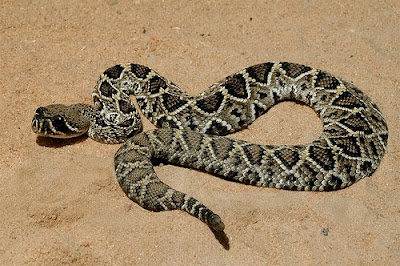
The argument describes a rattlesnake age folktale. According to this folktale, you can determine a rattlesnake's age by counting the number of sections on its rattle. This is because the rattlesnake forms a new section on its rattle each time it molts. The argument claims this rattlesnake age folktale doesn't work only because rattle sections break off due to their brittleness. It then concludes that if the rattles were not so brittle, the rattlesnake age folktale would work fine.

The question then asks for a necessary assumption. The correct answer tells us that food availability does not affect the molting rate. If food availability did affect the molting rate, then you could have two rattlesnakes, one that's had a lot of food in its life, one that's had very little food in its life, and they'd appear to be different ages.

As such, the claim that the rattles' brittleness is the only thing stopping the rattlesnake age folktale from being valid is making a large assumption. The argument assumes nothing else also needs to be true in order for the rattlesnake age folktale to be valid.

Therefore, the argument depends upon this assumption in order to be valid.


Must Be True
This answer choice could have also served as the correct answer choice to a Must Be True question. It needs to be true that food availability doesn't affect the molting rate in order for the argument to be valid (more on Necessary Assumption and Must Be True questions).


Must Be False
Because this large assumption must be true in order for the argument to work, the negation of this answer choice (the denial of this assumption) cannot be true for the argument to be valid, so it must be false that food availability affects the molting rate.


Strengthen
The argument as it stands is not airtight, so it's possible to strengthen it. Again, it's claiming that all we need to do to make this rattlesnake age folktale work is remove brittleness as a factor. If we view the answer choices through the lens of providing new information (Which one of the following, if true, would most strengthen the argument?), what we previously viewed as a Must Be True can now be viewed as a strengthener.

The correct answer to what was originally a necessary assumption question also serves to strengthen the argument by dismissing the possibility that food availability affects the molting rate.

Of course, choice A also serves to strengthen the argument. In fact, it fully justifies the conclusion and serves as a sufficient assumption. It just didn't NEED to be true.)


Weaken
An answer choice that strengthens the argument often does so by dismissing potential problems, alternative causes, or alternative explanations.

This is the case with our strengtheners above. If we negate an answer choice that would strengthen the argument, we are then weakening the argument.

As such, the negation of these answer choices would serve to weaken the argument.

Meaning that if we learned that food availability did affect the molting rate, that would weaken the argument. In fact, it would destroy the argument entirely. Similarly, if we learned that rattlesnakes did not molt exactly once a year, that would weaken the argument, but only a tiny bit


Evaluate the Argument
This is when we take a major strengthener or weakener and phrase it as a question or as a "what if?".

Question: Which one of the following would be most important to know in evaluating the conclusion drawn above?

Answer: Whether food availability affects the molting rate

If food availability affected the molting rate, that would weaken the argument
If food availability did not affect the molting rate, that would strengthen the argument


Resolve the Paradox / Discrepancy
Let's rephrase the stimulus by keeping the evidence the same but saying the conclusion did not logically follow. Something like:

"We genetically engineered rattlesnakes to remove brittleness as a factor, yet our top-secret Pentagon-funded rattlesnake age folktale still didn't reliably determine a rattlesnake's age."

How is this possible?

Well, if we learned that food availability affected the molting rate, that would explain why the rattlesnake age folktale still wasn't working.


***

Now go through the exact same process with another Logical Reasoning question. I propose PrepTest 30 - December 1999, Section 2, Question 15 (page 58 in Next 10).

Photo by zackbittner

LSAT Diary: LSAT Prep Concluding Thoughts

LSAT Blog LSAT Prep Concluding Thoughts Diary
If you want to be in LSAT Diaries, please email me at LSATUnplugged@gmail.com. (You can be in LSAT Diaries whether you've taken the exam already or not.)

Thanks to Law School Dreamer for sharing her experience and advice!

Law School Dreamer's LSAT Diary:

The week before the exam I took four practice tests – two of which produced scores below 150. I panicked. In fact, I scored a 149 on my very last practice test prior to the June 2010 test administration. This led me feeling, understandably, less than confident in myself – not the way I wanted to go into test day.

I spent the last 48 hours prior to my test day plastering my bathroom mirror with post-its containing messages like “sufficient assumption questions: premise + correct answer choice = conclusion”. I deeply regret having jumped into taking timed practice tests before completing the prep books. In one sentence, an overview of my prep could be described as: “learned about Logic Games, jumped into timed practice tests, got frustrated, freaked out, learned about Logical Reasoning, no time left to practice acquired skills, take four more practice tests, and arrive at test day.”

I wish I would have learned Logical Reasoning as soon as I was finished with Logic Games or maybe even together. It is unrealistic to expect that one can always know how to apply the skills without really practicing them so they become second nature. And though not too much time should be spent taking untimed practice tests, I found that doing so periodically improved my skills (and my score on the following timed practice tests) because it gave me the opportunity to really think about what I needed to do and why answer choices were correct or incorrect.

Additionally, I wish I would have waited to take timed practice tests until my improvement on untimed practice tests had plateaued, or I felt there was no longer any need to take them untimed because I had my strategy down to a science. Instead, I rushed into taking timed practice tests, and It was only a month ago that I said to myself “hey, maybe you should learn to walk before you run – slow down and figure out what’s going on.” Allowing myself to take the untimed practice tests actually increased my score considerably. This was evident by the very next timed practice test I took (I jumped 8 points).

Lastly, I would have reviewed all of my practice tests and forced myself to understand why I chose wrong. I never took the time to do this until a week before the LSAT. For some reason, I took the poor scores personally and was insulted, ticked off, and wanted to never see the test again. What a mistake. Also, to force myself to slow down and understand why I got a question wrong (instead of just saying well that was stupid, next) – I would actually type out in a word document where I went wrong and what I need to watch out for next time. I forced myself to do this for every question – but again, I’ve only done this on one test (far too few, and far too late) but even still that was a big help.

I was of course nervous for Monday and took a PT on Saturday and a PT on Sunday. I know some people advise against this, but I wanted everything fresh in my mind come Monday – and I think the reason why some people do not recommend this is for fear of burnout, but in all honesty, I did not spend enough time to be anywhere near burnout. I keep improving, and I want to capitalize on that every day until test day.

The night before test day, I packed my ziploc baggy with four sharpened pencils, my pencil sharpener, a banana, bottled water, and my admission ticket and laid out my test taking attire (which include comfy pants and shoes, a light top, plus a non-hooded zip up light jacket in case I am cold). I wanted to be as comfortable as possible. Probably not my most fashionable attire but it was the least restrictive.

I also packed my zip lock baggy, printed my LSAC ticket. I already visited my test center, and most important (but maybe silly to some men) I planned how I would be doing my hair in such a way that it will not be in my way – the last thing I want is my bags or strands of hair in my face while I’m looking down at my test booklet for four hours. I also knew what I would be eating for breakfast and lunch and packed a banana for the break.

I began telling myself that this test simply determines whether I retake in October, nothing more. Can you hear the positive and controlled tone in that? By telling myself it only determines whether I retake in October (and NOT that this test could ruin my entire life and break all chances of going to law school) I was able to put things into perspective. I told my husband that after 5:00 on Sunday, June 6th we were not to mention the LSAT, Law School, or anything with the word “test.” I tried to banish all thoughts related thereto from my mind. In fact, we even went out and saw a movie, “Killers” with Ashton Kutcher and Katherine Heigl, returned home and I went to sleep. Surprisingly, I slept well.

The next morning I paid close attention to my thoughts, and even my breathing. My thoughts and actions were almost machine-like. I refused to let myself be the emotional basket case I sometimes succumb to. I looked for positive reinforcements – and I got them. For instance, I want to study animal law and advocate for animal rights and welfare.

I left a ridiculous two hours early for my test center and on the way saw a giant turtle in a pond near the road and a deer (in the middle of the day) in a nearby field. Additionally, I did not notice it before, but when I examined my LSAT admission ticket, I realized my four-digit test center code was made up the last two digits of both my father’s and step-father’s birth years. It was these little things that allowed me to tell myself I was going to be okay.

I was amazingly calm – because I told myself I had to be. I did not allow my thoughts to run away with my emotions.

The entire day was a whirlwind. I walked out feeling good about the test, but had no clue how I had done. I didn’t even want to guess my score and I could hardly remember any of the questions. (I think that LSAC somehow brainwashes you as you're exiting the test center to be sure you don’t let any of the details slip). Over the following 2 ½ weeks I did my best to not think about my score (which was very hard to do). And then one day . . . .

My score arrived two days early – on Friday, June 25th. I was at my university in my Spanish professor’s office just about to do my oral interview in Spanish. She was very well aware that I was waiting for my LSAT score, and I glanced at my blackberry just one last time before I began the interview. And there it was – a 155/64th percentile. I was shocked. In all honesty, I thought I had gotten the wrong email. I thought I was misreading it. I had NEVER scored that high on any practice test (my best timed was 153).

I told myself going into this that my goal was 160, but that if I scored a 155 I would not retake. I had taken myself from a 143 to a 155 in four months practicing roughly 8-10 hours a week while working full time and attending full time classes - totally on my own. Realizing my accomplishment was so empowering and I began to think about how I had really achieved something that, going into, I was not totally sure was possible.

I am now within the range of schools I want to attend, but am encouraged by my first-time test success to consider retaking to shoot for a high enough score that may heighten my chances of obtaining scholarship money at the schools I want to attend. I’m still deciding whether I want to, or should retake, but nevertheless, I’m very happy with my June 2010 score.

If I do choose to retake, I will follow Steve’s retaking test strategy. In the meantime, I’ve already drafted two versions of a personal statement and have notified my letter of recommendation writers that I will be providing them a packet of information to aid them in their letter writing. I hope to have my transcript, personal statement, and letters of recommendation completed and submitted by the end of August and ready to apply to schools in September.

Photo by Paul Watson

LSAT PrepTest 60 Logic Game #1 Explanation

LSAT Blog PrepTest 60 Logic Game ExplanationThe June 2010 LSAT (PrepTest 60) LSAT Logic Games section seems to have given enough people trouble that it makes sense for me to publish complete explanations for each of the 4 Logic Games in the section.

Don't look at these explanations until you've taken PrepTest 60 as a full-length timed exam.

This blog post covers the first Logic Game.

Also see:

PrepTest 60 (June 2010 LSAT), Game 2 Explanation
PrepTest 60 (June 2010 LSAT), Game 3 Explanation
PrepTest 60 (June 2010 LSAT), Game 4 Explanation

Explanations for Recent LSAT Logic Games

***

Here's the main diagram:

LSAT Blog PrepTest 60 Logic Game #1 Explanation


Explanation of main diagram:

I've placed J and R to the right of the morning and afternoon rows, respectively, because they will have to go in those rows.

I've drawn K and N with slashes through them under the Wednesday column because they can never go on Wednesday (since Q must always occur at least one day prior to them).

I've drawn Q with a slash through it under the Friday column because it can never go on Friday (since both K and N must always occur at least one day prior to it).


Question 1:

Each of the incorrect choices will violate at least one rule.

Choice E has J in afternoon.
Choice D has R in morning.
Choice A has K before Q.
Choice C has Q and N on same day.

By elimination, the answer is B.


Question 2:

This sort of question can take forever if you start by testing each choice.

Looking at the rules, start by thinking about Q, K, and N, because they are involved in the rule that Q is before both K and N, and each of them is also involved in one of the other two rules.

Out of these 3 variables, Q is unique because it must go before the other two variables, so start by testing out Q on Thursday morning.

(N is unique also, because it's involved in the R rule, but Q trumps it because Q must go before 2 other variables, which give it unique restrictions regarding how late it can appear on the diagram.)

If Q on Thursday morning, then K and N would both have to be on Friday. J must be in the morning on the same day as either K or Q. If Q's already in the morning, it can't be with J. If K and N are both on Friday, then N can't be with J. As such, Q on Thursday morning violates the rule that J must be with either Q or K, and D is the answer.


Question 3:

We know that neither K nor N can ever be on Wednesday at all, so any choice containing at least one of the two is the answer.

Choice A contains K, so it's the answer.


Question 4:

If K's on Friday morning, this means J and Q must be on the same day with J in the morning. This creates two main possibilities. One with J and Q on Thursday and another with J and Q on Wednesday:

LSAT Blog PrepTest 60 Logic Game Question 4 Diagram 1


LSAT Blog PrepTest 60 Logic Game Question 4 Diagram 2


J on Thursday morning occurs in the 1st of these 2 diagrams, so it's our answer, choice A.


Question 5:

We already know Q can't be on Thursday or Friday morning, so if it's to be on a morning, it must be on Wednesday morning.

This means J and K must be on the same day with J in the morning. This creates two main possibilities:

LSAT Blog PrepTest 60 Logic Game Question 5 Diagram 1


LSAT Blog PrepTest 60 Logic Game Question 5 Diagram 2


Looking across these diagrams, we see J, K, N, and R appearing on Thursday, so we can eliminate all of those choices.

Whatever's left is our answer (choice E).


Question 6:

From previous diagrams, we've seen J, S, and Q appear on Wednesday morning, so choices A and B can be eliminated.

Out of the remaining variables, neither K nor N can be on Wednesday at all, and R is always in the afternoon, so it can't be on Wednesday morning either. That means J, S, and Q are the only ones who can appear on Wednesday morning, so the answer is 3 (choice C).

Photo by Urban Woodswalker

LSAT Logic Games Explanations: PrepTest 60, Game 2

LSAT Logic Games Explanations PrepTest 60 Game 2This blog post covers the second Logic Game of the June 2010 LSAT (PrepTest 60).

Don't look at these explanations until you've taken PrepTest 60 as a full-length timed exam.


Also see:

PrepTest 60 (June 2010 LSAT), Game 1 Explanation
PrepTest 60 (June 2010 LSAT), Game 3 Explanation
PrepTest 60 (June 2010 LSAT), Game 4 Explanation

Explanations for Recent LSAT Logic Games

***

The rules in this game are primarily relational, meaning they require that one variable occurs before or after another, so we're dealing with a Pure Sequencing game.

In these games, I like to build the diagram step-by-step.

In this particular game, I diagram the first rule, then connect it with the second, to form:
LSAT Blog June 2010 LSAT Game 2 First 2 Rules Combined


Whatever's to the left of those lines is earlier than whatever's to the right of it.

The first rule told us that L and M are earlier than H, so I've drawn lines connecting L and M to H.

The second rule told us that P and L are earlier than J, so I've reused the L that I've already drawn and placed it before J. I've also drawn a line from P to J in order to indicate that P is before J.

***

At this point, we get a conditional rule: If M is before P, then H is before G.

Since no two variables occur simultaneously, the contrapositive would simply be:

If G is before H, then P is before M.

The diagram I've previously drawn (above) is the main diagram. You can throw in a G with a slash through it to the right of the diagram if you want to deal with the conditional rule last.

However, I also like to make two big diagrams:

One with the conditional rule of: M before P ---> H before G


Another with its contrapositive: G before H ---> P before M


Initial diagram with M before P ---> H before G:

LSAT Blog PrepTest 60, Game 2, Diagram 1 - not yet complete


You'll notice that I placed M a bit to the left of where it previously was, just to more easily indicate that M is before P. I've also included G after H, since we know that H is before G.

However, the diagram is not yet finished because we know that G can't be last (4th rule). The only variable eligible to go last is J, so I must now create a modification of this diagram to represent that.

It becomes:
LSAT Blog PrepTest 60, Game+2, Diagram 1


This new diagram preserves all the previous knowledge we had, but it now ensures that J goes last to avoid making G go last.

Spend at least a few moments looking at the incomplete version of this diagram (before I placed J) last to figure out how I got my final result. It's not easy, but it's important.


Diagram with G before H ---> P before M:
LSAT Blog PrepTest 60, Game 2, Diagram 2


This one's a bit easier to make. Again, I've preserved everything we had from the combination of the first two rules, and now I've inserted G before H, as well as P before M. In this diagram, it's clear that either J or H will be last, so we've been luckier. We don't have to make any modifications to ensure that G is not last.


Quick note:

These aren't necessarily the only two possibilities, of course. It's entirely possible that neither of those conditionals will be activated (meaning the sufficient condition of either conditional statement might not be met). However, by drawing those out, we now know what happens if either of those conditionals are activated, and we also get the benefit of having a few more specific diagrams.


Now, the questions:

Question 7:

Take one rule at a time and apply it to the choices:

The first rule, that L and M go before H, eliminates choice C.

The second rule, that L and P go before J, eliminates choice A.

The fourth rule, that G goes before D, eliminates choice D.

The third rule, that M-P ---> H-G, eliminates choice B.

Answer is choice E.


Question 8:
H before G could be true in the diagram with M before P. Choice A is eliminated.

H goes 6th could be true in the diagram with G before H. Choice B is eliminated.

In the initial diagram that simply combines the first two rules, L goes before both J and H, so it can't be 5th. Choice C is our answer. (I'll go explain the remaining choices anyway).

P before M occurs in the diagram with G before H. Choice D is eliminated.

P appears second could occur in the diagram with G before H (because we could have G first). Choice E is eliminated.


Question 9:

In the initial diagram that simply combines the first two rules, we know that none of P, L, or M can go last because there's at least one variable that each must go before. We also know that G can't go last (due to the 4th rule). Looking at the diagram with M before P and at the diagram with G before H, we know that J and H could go last. Therefore, the correct answer is choice D (2).


Question 10:

This question imposes the restriction that J is before M.

Draw J - M on your paper, then, step-by-step, combine the other variables contained within the initial diagram (the one that simply combines the first two rules).

Here's one step-by-step process by which you can make all the inferences based on J going before M (the order in which you connect the variables involved in the game's first two rules doesn't really matter):

LSAT Blog PrepTest 60 Game 2 Question 10


For the last step, I placed G before H simply because we know G can't be last.

Now, let's run through the choices:

GLPH works with our final product. Even though G is toward the end of the diagram, all we know about it is that it's before H. GLPH doesn't violate anything, so choice A is our answer.

I'll run through the other choices anyway:

GPHL doesn't work because L must go before H on this diagram. Choice B is eliminated.

LHGP doesn't work because G must go before H and because P must go before H. Choice C is eliminated.

LPHG doesn't work because G must go before H. Choice D is eliminated.

PLHG doesn't work because G must go before H. Choice E is eliminated.


Question 11:
If L is immediately before G, then G would occur before H (since L is before H).

When G's before H, P's before M. We've already drawn a diagram to deal with this possibility. As a refresher, it's:
LSAT Blog PrepTest 60, Game 2, Diagram 2


Now, with the limitation that L is immediately before G, we get:

LSAT Blog PrepTest 60 Game 2 Question 11


All I've done is take G from the bottom of the diagram and put it directly to the right of L.

Now, the question of what must be true:

G no later than 3rd? Well, it only has to have two things after it (H and J), so it could be 4th. Choice A is eliminated.

H appears last? Nope, J could appear last. Choice B is eliminated.

L no later than 3rd? Well, it has to have three things after it: G, J, and H, so it has to be no later than 3rd. Choice C is our answer.

I'll go through the others, anyway.

M before G? There's no rule regarding their order - all we know is that they're both before H. Choice D is eliminated.

P first? It's possible to have L first. Choice E is eliminated.


Question 12:
If M appears first...

step-by-step, place the other variables contained within the initial diagram (the one that simply combines the first two rules) after it.

We get:


Since M being first requires that M go before P, we know that H must go before G. Since G can't go last, J must go last, meaning G will go before J.

Now, the question of what must be true:

G 5th? Nope. G only has to have two things before it, so it could be as early as 3rd. Choice A is eliminated.

H 3rd? H
only has to have one things before it, so it could be as early as 2nd. Choice B is eliminated.

J 6th? Yes, J must go last on our diagram, and choice C is the answer.

I'll go through the others:

L 2nd? L only has to have one thing after it (J), so it could be as late as 5th. Choice D is eliminated.

P 4th? P only has to have one thing after it (J),
so it could be as late as 5th. Choice E is eliminated.


Photo by telstar

June 2010 LSAT Logic Games Explanation, Game 3

June 2010 LSAT Logic Games ExplanationThis blog post covers the third Logic Game of the June 2010 LSAT (PrepTest 60).

Don't look at these explanations until you've taken PrepTest 60 as a full-length timed exam.


Also see:

PrepTest 60 (June 2010 LSAT), Game 1 Explanation
PrepTest 60 (June 2010 LSAT), Game 2 Explanation
PrepTest 60 (June 2010 LSAT), Game 4 Explanation

Explanations for Recent LSAT Logic Games

***

This game, often referred to as "the mulch and stone game", or simply "the mulch game", was one of the tougher games of the section, simply because it only had two rules. However, you can make several inferences with these rules. I use them to make 4 main diagrams.

Initially, the rules don't give you very much to work with:


June 2010 LSAT Logic Games Explanation Initial Diagram


We have 7 spaces for the 7 loads. M must go on 5. We have 3M and 4S to place, and we have a maximum of (less than or equal to) 3 cleanings.

For this game, I create 4 main diagrams. All valid scenarios fall within one of the four.

I create them by taking advantage of the fact that there are only two types of variables to place in the 7 spaces: Mulch and Stone. I also take advantage of the fact that we already have a variable (Mulch) on 5.

Adjacent to Mulch on 5, we have only four possibilities:

Mulch on 4, Stone on 6
Stone on 4, Mulch on 6
Mulch on 4, Mulch on 6
Stone on 4, Stone on 6

Drawing this information on four main diagrams gives me the following:

June 2010 LSAT Logic Games Explanation 4 Main Diagrams


Next to each of these diagrams, I've listed the variables that have not yet been placed (keep in mind that we have 3 Mulches and 4 Stones in total).

I draw vertical lines between consecutive variables that are different to represent the "cleanings" between different types of variables.
Because the third diagram from the top only has Stones remaining to place, I completely fill in that diagram:

June 2010 LSAT Logic Games Explanation 4 Main Diagrams with Lines and complete 3rd diagram


You can leave off here and jump into the questions and answer them all correctly. However, there are a couple of other initial inferences worth making if you can.

Both of the top two diagrams have only one Mulch remaining to place. If we placed that remaining on space 2 for both of those diagrams, they would then be surrounded by Stones. Consecutive loads of different kinds require cleanings. For the top two diagrams, placing M on space 2 results in 4 cleanings in those diagrams:


June 2010 LSAT Logic Games Explanation with 2 first diagrams invalid


However, the maximum allowable number of cleanings is 3, so placing M on space 2 results in invalid diagrams.

(Yes, the top two diagrams in the above picture are invalid. I've simply drawn them there to show you why M cannot be on 2 in those diagrams.)

This leaves S to be on 2 in those diagrams:

June 2010 LSAT Logic Games Explanation with S on 2


But wait - there's more. What sticks out to me at this point is that, in the 2nd diagram, we have S on both 2 and 4. Placing the final remaining M on 3 might be problematic. Let's see what happens:

June 2010 LSAT Logic Games Explanation with M on 3


Sure enough, placing M on 3 results in 4 cleanings, when the maximum allowed is 3. Therefore, having M on 3 in this diagram (the 2nd diagram in the larger scheme of things) is impossible.

Therefore, we must have S on 3 in the 2nd diagram:
June 2010 LSAT Logic Games Explanation with S on 3


Now, the bottom diagram already has two cleanings, so only one potential cleaning remains for that diagram. However, we still have 2M and 2S left to place. If we placed an M on either 3 or 7, we'd reach the limit of 3 cleanings. However, the other M would still have to touch one of the other Stones, so we'd reach at least 4 cleanings total (try it out).

Therefore, the bottom diagram can't have M on either 3 or 7, so we must have S on both 3 and 7 in that diagram:
June 2010 LSAT Logic Games Explanation with S on 3 and 7


For those of you who are still reading, it's time to *finally* move on to the questions. First, a comment/caveat:

Again, I know people are going to ask me whether making all these initial inferences is really necessary. The answer is a firm "No." You can get all the questions right without doing all this work beforehand, but doing this will make the questions go more smoothly.

The method you choose depends upon your level of comfort with spending more time in the initial setup, as well as your ability to diagram quickly.

Even if you don't have the time to make all of these inferences and still have the time to get to the questions, that's ok. Again, you don't have to make all these inferences, but I still want to get you thinking about the fact that it's possible to make them. While they might give you more information than you need for these questions, it's better to have too much information than too little.


Question 13:

The best way to approach this question is to see which of the choices we've already seen happen.

Mulch on 4 and 6 occurred in the 3rd diagram, so it's our answer (choice E).

We can also eliminate all the others simply because we have a comprehensive framework for all the possible valid scenarios in the game.


Question 14:

Must the 2nd load be Stone? In our 4th diagram, we had Mulch on 2, so choice A is eliminated.

Must the 1st and 2nd loads be the same? Well, in the 1st and 2nd diagrams, it seems like they could be different. In the 2nd diagram, we could easily put Mulch on 1 and S on 7, and it would still be valid. Choice B is eliminated.

Must the 2nd and 3rd loads be different? Well, in the 2nd and 3rd diagrams, they're identical. Choice C is eliminated.

Must we have at least 2 Mulches consecutively? That occurs in all 4 diagrams, so it must be true in general. Choice D is our answer.

I'll go through the last one anyway.

Must we have at least 3 Stones consecutively? In the 4th diagram, we don't, so choice E is eliminated.


Question 15:
M on 3 could only occur in the top diagram out of the 4 main diagrams, so I'd make a more specific version of that diagram. Since there was only 1 Mulch remaining anyway, Stones will have to go in the remaining slots:

June 2010 LSAT Logic Games Explanation Question 15


Must 6 and 7 be different? Nope, they're the same. Choice A is eliminated.

Must 1 and 2 be different? Nope, they're the same. Choice B is eliminated.

Must 7 be Mulch? Nope, it's Stone. Choice C is eliminated.

Must 6 be Mulch? Nope, it's Stone. Choice D is eliminated.

By elimination, it's Choice E (and, yes, the first load is Stone).


Question 16:

Exactly two cleanings occurs in the 3rd main diagram, as well as in our work for Question 15. We can use both of these diagrams to help us eliminate things that aren't necessarily true.

2nd load is Stone occurs in both the 3rd main diagram and in Question 15's diagram, so we can't eliminate this answer choice.

However, the only diagram (out of our 4 main diagrams) in which the 2nd load
isn't Stone is be the 4th one (where we have 3 cleanings, not 2). Therefore, the 2nd load must be Stone in any diagram with 2 cleanings. Choice A is our answer.

You could pick choice A and move on, but I'll run through the other choices:

3rd load is Mulch does not occur in either the 3rd main diagram or the diagram for Question 15, so Choice B is eliminated. (Of course, seeing 3rd load being Stone in even only one of those diagrams would've been enough to eliminate it.)

3rd load is Stone occurs in both those diagrams, so we keep it for now.

6th load is Mulch does not occur in Question 15's diagram, so choice D is eliminated.

7th load is Mulch does not occur in either of those diagrams so choice E is eliminated. (Again, seeing the 7th load being Stone in even only one of those diagrams would've been enough to eliminate it.)

So, we're down to Choices A and C.

The 4th diagram isn't relevant because it has 3 cleanings. We've already used the 3rd diagram. The second diagram has Stone on both 2 and 3, so that can't possibly help us (since it wouldn't allow us to disprove either answer choice). This leaves the 1st (top) diagram.

This diagram already has the 2nd slot filled by Stone, so we know that Stone must be on 2 no matter what.


Question 17:
The 4th diagram doesn't ever have 3 loads hauled consecutively, so it's relevant to solving this question.

The 1st load is not Stone in this diagram, so we don't know whether it could be true (perhaps there's some other valid diagram where the first load is Stone and we don't have 3 loads hauled consecutively). Leave this choice alone and move on.

The 4th load is Stone in this diagram, so we know that it could be true. Choice B is our answer. Pick it, and we're done with the game.

None of the other choices occurred in the 4th diagram. (Doesn't mean they couldn't occur in some other valid diagram where we don't have 3 loads hauled consecutively, of course.)

Since the 2nd and 3rd main diagrams have 3 loads hauled consecutively, they're not relevant.

If you want to test out the other answer choices, simply take the 1st main diagram, place Stone on 3 (to avoid having 3 consecutive Mulches), then make one version of it with Stone on 1 and Mulch on 7, and make another version with Mulch on 1 and Stone on 7. You'll be able to disprove the other answer choices.

***


For more advanced test-takers, the top 2 main diagrams can be broken apart even further:

The top main diagram can be broken into 3 main diagrams based upon the 3 different potential placements of the remaining M (spaces 1, 3, and 7).

The 2nd main diagram can be broken into two main diagrams based upon the two potential placements of either the remaining M or remaining S (depending on how you want to phrase it):

June 2010 LSAT Logic Games Explanation Advanced Technique


This will make the questions even easier. It's all a matter of personal preference, how much work you're willing to do up-front, and how confident you are in your ability to draw out the limited possibilities.

***

Tough game, huh?

Photo by cottergarage


LSAT Logic Games Solutions for June 2010 LSAT, Game 4

LSAT Logic Games Solutions June 2010 LSATThis blog post covers the fourth Logic Game of the June 2010 LSAT (PrepTest 60).

Don't look at these explanations until you've taken PrepTest 60 as a full-length timed exam.


Also see:

PrepTest 60 (June 2010 LSAT), Game 1 Explanation
PrepTest 60 (June 2010 LSAT), Game 2 Explanation
PrepTest 60 (June 2010 LSAT), Game 3 Explanation

Explanations for Recent LSAT Logic Games

***

This game gives us a lot to juggle. We have:

People: Farber, Gombarick, Hall, Jackson, Kanze, Lha
Stories: Romania, Spain, Tuscany
Fields: Photography, Writing

Fortunately, they tell us that there are two people per story: one photographer, and one writer. This gives us:
LSAT Blog Interns LSAT Logic Games Explanations


The six people will go in the six spaces.

The first rule tells us G and L will go in the same row, so you can just write down G and L next to each other on the side (horizontally).

The second rule tells us F and K will go on different rows, so next to the rows (on the left side), you can put F/K next to one row, and K/F next to the other row.

The third rule tells us H goes in the photographer's assistant row, so place it to the left of the top row.

At this point, there's a big inference to make. We already have F/K in the photographer's assistant row, and we now have H in that same row. There's no way to fit both G and L in that row, but the first rule requires they go in the same row. Therefore, they both go in the writer's assistant row.

The writer's assistant row is now full, so J will have to go in the photographer's assistant row.

Inference for the win.

What you have now should look something like this:

LSAT Blog Interns LSAT Logic Games Explanations Inference FTW


Next rule: J goes on Tuscany. We can put it in the top-right space.

Finally, K doesn't go on Spain, we can put a K with a slash through it under Spain.

We now have a pretty snazzy main diagram:

LSAT Blog Interns LSAT Logic Games Explanations Main Diagram


You can now make two main diagrams:

one with F on the Photo level and K on the Writer level

one with K on the Photo level and F on the Writer level

This gives us:

LSAT Logic Games Solutions 2 Main Diagrams


Splitting it apart into two main diagrams (as I've just done) will allow you to make inferences regarding only one of those two.

On the first diagram (on the left), we know that K can't be on Spain, so we'll have either G or L in that space (on the writer's assistant row).

We can place F/H and H/F on the photographer's assistant row for Romania and Spain, since those two are interchangeable in those spaces.


For the diagram on the right, we once again can't have K on Spain, so K will have to go on Romania. This leaves H to go on Spain. We don't know enough to really do anything on the other row

This all results in the following:

LSAT Logic Games Solutions 2 Main Diagrams More Inferences


Now, the questions:

Question 18:
This question specifically regards the photographer's assistant level.

We know that J has to be on Tuscany in this level, so any choice that lacks this is eliminated.

Choices B, C, and D are eliminated.

Now, we're down to A and E, but we know that K can't be on Spain, so Choice E is eliminated, and Choice A is our answer.

We've made so many inferences that we could've also predicted that the answer will be:

FHJ (from 1st diagram - the one on the left)
HFJ (from 1st diagram again)
KHJ (from 2nd diagram - the one on the right)

The method you choose simply depends upon how many inferences you've made and your own personal style. Neither way is wrong.


Question 19:
If F is on Romania...by plugging this into each main diagram, we get:

LSAT Logic Games Solutions Question 19


Now, the choices:

G on Spain doesn't have to be true. We could easily have L on Spain in either of the diagrams (even having L on Spain in only one possible scenario would prove this). Choice A is eliminated.

H on Spain occurs in both, so we know it must be true in all valid scenarios because we're working with main diagrams that encompass all possibilities. Choice B is our answer.

I'll go through the rest, though.

In the first diagram, K could be on Romania. In the second diagram, K is definitely on Romania. Using only one of those diagrams is sufficient to disprove this. Choice C is eliminated.

We could easily have G on Spain in either diagram. Again, only one would be sufficient to disprove this. Choice D is eliminated.

We could easily have G on Tuscany in either diagram, and we could even have G on Romania in the first diagram. Again, only one would be sufficient to disprove this. Choice E is eliminated.


Question 20:

If F and H go to the same story, we must be dealing with only the 2nd main diagram. The first has them on the same row, requiring them to be on different stories.

Using the 2nd main diagram, we get:

LSAT Logic Games Solutions Question 20


F with H requires it to go on Spain since H was already on Spain. G and L are now split into the remaining stories: Romania and Tuscany.

Choice A is eliminated because we know F is definitely on Spain.

G can be on Romania, so Choice B is our answer.

I'll go through the rest:

H must be on Spain in this diagram, so it can't be on Romania. Choice C is eliminated.

K must be on Romania in this diagram, so it can't be on Tuscany. Choice D is eliminated.

F is on Spain in this diagram, so L can't be on Spain. Choice E is eliminated.


Question 21:
F on the writer's assistant row refers to the 2nd main diagram.

When they ask who the Romania pair could be, it will have to include K since K is fixed on Romania in this main diagram.

Any choice containing K is automatically eliminated. Choices A, B, and E are eliminated.

We know H can't be on Romania because it's already on Spain, so Choice C is eliminated.

Therefore, choice D is our answer, which is entirely possible on this diagram.


Question 22:
If G and K go to the same story, we must be dealing with only the 2nd main diagram. The first has them on the same row, requiring them to be on different stories.

Since K's already on Romania in this diagram, we get:

LSAT Logic Games Solutions Question 21


F on Romania's impossible. It must be on Spain or Tuscany. Choice A is eliminated.

G on Spain's impossible. It must be on Romania. Choice B is eliminated.

H on Romania's impossible. It must be on Spain. Choice C is eliminated.

K on Tuscany's impossible. It must be on Romania. Choice D is eliminated.

L on Spain can occur. Choice E is our answer.


Question 23:
Looking at our two main diagrams...

G, J, and L have all appeared on Tuscany, so they're eliminated. J isn't even a choice, but we can certainly eliminate Choices B and E.

K can go on Tuscany in the first main diagram, so that's eliminated. Choice D is eliminated.

F can go on Tuscany in the second main diagram, so that's eliminated. Choice A is eliminated.

That leaves H, which can't go on Tuscany in either diagram. Therefore, choice C is our answer.


Photo by byflickr