Former LSAT Question-Writer Interview

LSAT Blog Former LSAT Question Writer InterviewI recently interviewed Stephen Harris, former LSAT question-writer and author of Mastering Logic Games. (Yes, he's written hundreds of the questions that appear in your books of LSAT PrepTests.)

Our discussion follows.

You can also:

1. Read ALL of my interviews with him (more than 5!)

2. Get them all in a free book I put together.

***

1. What inspired you to become a writer of LSAT questions (an "item-writer"), and what's the process by which one gets that job?

Good question. It’s not exactly the kind of thing you lie in bed at night, hoping someday to grow up to be. When one with a philosophy doctorate looks for a job, there is a publication called “Jobs for Philosophers” that contains job listings, mostly for academic posts, but with a few listings for non-teaching positions. Testing companies list job openings there, and I applied for one. I ended up with a teaching position, but when I was later contacted about writing LSAT items as a freelancer, I agreed.

What makes writing LSAT items so rewarding, compared to writing items for other exams, is that the skills tested, especially in logical reasoning, are so relevant - what makes this argument stronger; what flaw does this argument commit, etc. These skills are among the set of important tools necessary for success not only in law school, but also as a responsible citizen.


2. Which specific LSAT questions, passages, and games did you write? Any tough Logic Games or Logical Reasoning questions?

I wrote several hundred logical reasoning items over the years, but the way the LSAC item review process is set up makes it very difficult to identify your items later on. Basically, there are two levels of review between the item writer and the test form, and adjustments can be made all along the way, so it’s hard to look back at tests and say “yeah, I wrote that one.” Not to mention that it may be several years before your item even makes it to a test form. One thing I definitely learned from working with the LSAC folks is that they go out of their way to ensure that the items that appear on the test are fair and consistent.


3. What sort of guidance / parameters were you given by ACT / LSAC when it came to constructing each item-type?

LSAC did a great job of training item writers. I was sent to a three-day workshop that covered the nut-and-bolts of item writing for logical reasoning, including critiques of practice items I had written. Additionally, item writers received a detailed guide that covers all of the item types, as well as a “don’t do this” list. And editors offered lots of feedback if you got something wrong to help you hit the mark the next time. ACT and LSAC only bought the items that they liked, so there was plenty of incentive all around to get it right.


4. How did you and other item-writers come up with the topics for each section of the exam? Is there some kind of pre-approved list? What's up with all the questions about dinosaur extinction?

This is a challenge for any item writer. I don’t remember a list of approved topics, but it was made clear from the beginning that certain topics were undesirable; in particular, any that are likely to elicit a strong emotional response from test takers. Hence the dinosaur items. When I’m writing items, I simply try to pay attention, often to what I’m reading, but sometimes just to the bugs in the garden. Actually, Google and Wikipedia make item writing in general much easier, although I had stopped writing LSAT items by the time they came around.


5. How long did it take you, on average, to write each type of LSAT question? Everyone seems to hate Parallel Reasoning questions, but which Logical Reasoning question-type is the most difficult to create?

That reminds me of a lawyer joke – “it’s tough to tell what counts as billable time.” Seriously, if you have an idea for an item then writing it takes an hour or two, with editing. Otherwise, you can spend a lot of time staring at a blank screen before fingers hit keyboard. I found that it was hard to average one LSAT item a day when I was writing items as fast as I could. And some items are definitely harder to write than others. Parallel reasoning/flaw items are the toughest, because you need six topics per item – one for the stimulus, and one for each answer choice as well. You develop an appreciation for folks who have to be creative on a daily basis – cartoonists, comics, etc.


6. What do you think is the most difficult Logic Game, and the most difficult Logical Reasoning question, out of all the released LSAT PrepTests?

One of my favorite LR items is the rattlesnake item, number 22 in section 2 of PrepTest 30. It really tests one’s ability to distinguish necessary assumptions from sufficient assumptions. The game that I think is hardest is the bus game - PrepTest 36, Game 3. This is a complicated game that can easily overwhelm a test taker who is unprepared.


7. I've noticed that certain Logic Games are virtual copies of each other. (Especially #3 and #7 in this list.) Does this stem from the item-writers being lazy and reusing old content, LSAC rewarding those who studied a lot, a combination, some other explanation...?

Yes - I especially like to compare PrepTest 13, Game 3 to PrepTest 32, Game 1. Not only the setups, but also the formulations of the first rules are strikingly parallel in these two games. (Even the numbers are near anagrams – coincidence?) I can only speculate as to why this happens, other than to pick up on your point that on a standardized test things are, well, standardized. There really is no question as to whether or not the same things are tested over and over – they are. The only question is whether you’ll be able to see how the items on your test are similar to previous items. As your list indicates, sometimes the similarity can be pretty close.


8. Have you ever heard of folks at LSAC reading online message boards and laughing at the stressed-out test-takers who post there?

I have never heard of LSAC folks basking in the misery of prospective law students. My experience with these people is that they are pretty sympathetic with the test taker and her plight. A guy I worked under at LSAC, for instance, had a hard time getting into grad school because he refused to take the GRE since “it didn’t measure anything important.” This is the kind of guy you want building your standardized test. One thing I have learned from studying thousands of LSAT items is that, first appearances notwithstanding, there is a benevolent intelligence at work behind the LSAT. The test taker just needs to tap into it.

Photo by the.sprouts

Mastering LSAT Logic Games


"The Art of Warbut for the LSAT"

LSAT prep does feel like a battle sometimes, but I’ve gotten an enemy general to write up a battle plan for us.

Yes, really.

I got Dr. Stephen Harris, a former writer of actual LSAT questions(!) to write an LSAT prep book called Mastering LSAT Logic Games.
As you can imagine, holding this position has given him a tremendous amount of insight into solving the questions. The guy understands them in a way that few other people do.


I can’t overstate how great of a resource this is. This is like getting to talk to Michael Jordan about basketball, Meryl Streep about acting, or Colonel Sanders about chicken. 

This guide covers how to approach each major type of Logic Game as well as the questions associated with each one.

Here’s a quick breakdown of the chapters you’ll find. 

- Introduction and Overview
- Setting Up Games
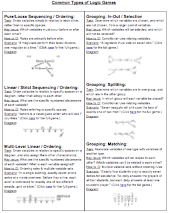
- Common Logic Game Types
- Sequencing Groups of Elements
- Solving Items
- Rare Item Types
- Sample Games

Each of those chapters has several sections that really get into understanding the nuts and bolts of Logic Games and how they’re built.


Get your copy for only $24.97:

CC


Fun Facts:

-This is a PDF available for instant download after submitting payment, so you can download it and begin using it right away. (After all, nobody likes waiting for anything to ship.)


P.S. Here's a real photo of Dr. Harris in the flesh!


P.P.S. If you consider how much money you'll make from increasing your LSAT score and getting into a better law school...or getting more scholarship money...$24.97 is such a tiny drop in the bucket.


LSAT Diary: Studying with LSAT Blog and Steve

LSAT Blog Diary Studying LSAT Blog SteveThis installment of LSAT Diaries comes from Peter, a recent college graduate who prepared for the LSAT using my day-by-day LSAT study plan, as well as a bit of my tutoring. He ended up with a 170 (a 10-point improvement from his original LSAT score!)

In this LSAT Diary, he talks about using the blog and my help as he prepared.

If you want to be in LSAT Diaries, please email me at LSATUnplugged@gmail.com. (You can be in LSAT Diaries whether you've taken the exam already or not.)

Thanks to Peter for sharing his experience and advice, and please leave your questions for him below in the comments!

Peter's LSAT Diary:

The LSAT has been an albatross around my neck since I was a freshman in college. After a poor academic showing in high school, I decided on law school and worked very hard to achieve an excellent undergraduate GPA. I faced a dilemma; with the test two-to-three years away, I knew from the beginning the amount of material available to study would be limited, and if I started too early, I would run out. I did have an advantage, however, because I could plan well and maximize my efforts. I took a diagnostic test (the preptest with the awful carwash game [Ed. PrepTest 30, Game 3]) and scored a cold 160. At this point I didn’t know anything about percentiles, curves, or the schools I wanted to attend – I just knew I needed to put forth the best effort I could.

At one point in my senior year I was planning on taking the October LSAT, after accompanying my fiancée on a study abroad trip over the summer. This, as it turns out, was a mistake. I got very little studying done, but fortunately, what I did get through was from a Kaplan book, instead of wasting actual LSAC material before I was ready. When I took another diagnostic and dropped to 158, I knew I had to put the test off and make a real plan.

Eventually, while browsing for study guides on the internet, I found Steve Schwartz and the LSAT Blog. Jubilant, I downloaded the guides, bought all the books Steve recommended, dumped the ones I’d been using, and planned on registering for June. When I did finalize a schedule, I bought the detailed seven-month daily study guide. After researching schools, my goal was to earn a 170. I was in graduate school at the time, with a part time job, but I had enough time to study seriously. I think slicing the first few preptests up by question type was a great idea. I cruised through logic games (worst section on diagnostics), doing pretty well untimed. I got through logical reasoning, decently. I breezed through reading comprehension, my strongest section by far. By the point that I took SuperPrep exams A, B and C, I was feeling confident, and scored 164, 165, and 166, respectively. Better, but no cigar.

I began taking full length practice tests and worked through them using Steve's guides and explanations. (I am not financially well-off, but if you are going to go to law school (which entails large debt loads), the best investment you can make to go to the best school you can is to purchase the best prep materials you can.) My scores began creeping up, until a sudden drop precipitated worry. After my first distance tutoring session with Steve over the phone, I felt better and began scoring in the 167 – 169 range.

Things were looking up, until about two weeks before the test I reached a second trough of low scores. I’d read you should plateau at your goal score two weeks before the test. I had one more session with Steve and buckled down, taking a preptest a day. My last four of five tests, taken at the test site, were 168, so I thought I finally settled. I felt incredibly nervous the night before; I went to sleep early, ate yogurt for breakfast (courtesy of my fiancée), and stressed out at the center, warming up on recent preptests.

I took the long walk, and felt my heart in my throat until we started filling out the basic test information forms. I had practiced so much; this was just like one more lap around a track. I felt completely confident through the test, nothing untoward happened throughout. A miserable few weeks later, I got my score back; 170. I was thrilled to have set a goal and reached it, and felt more secure for law school. I give much credit to Steve for his guidance and advice, and my fiancée for all sorts of support, but to do well also takes a willingness to work hard and stick to a rigorous schedule. Study your wrong questions, work hard, and good luck in October.

Photo by deerleap

Logic and Games

* A lawyer/author's awesome tips on writing the law school personal statement. [LSAT Blog]

* Law school grads sue New York Law School and Villanova for falsely reporting employment and salary info. [ABA Journal]

* Yves Saint Laurent and Christian Louboutin fight in court over who gets to sell red-soled shoes. [NYMag]

* Aspiring New York Jet Chris Stewart balances his lawyering dreams with his football dreams. [WSJ]

* Neither Bert nor Ernie possesses a sexual orientation. They're Muppets, damnit! [Sesame Street Facebook Page response to Change.org petition]

* Abercrombie and Fitch offers to pay "The Situation" to stop wearing its clothes. [WSJ]

* 15 words with no English equivalent. [Mental Floss]


LSAT PrepTest Question Explanations for Logic Games (a free sample!)


I've written explanations for over 1,000 LSAT questions. Below, I'm including a small free sample of the Logic Games explanations just so you can see what they're like.

Get the complete LSAT PrepTest explanations HERE.

These are just for a handful of games from LSAT PrepTests 57-61:

PrepTest 57 (June 2009 LSAT), Game 3 Explanation
PrepTest 58 (Sep 2009 LSAT), Game 4 Explanation
PrepTest 59 (Dec 2009 LSAT), Game 4 Explanation
PrepTest 60 (June 2010 LSAT), Game 1 Explanation
PrepTest 60 (June 2010 LSAT), Game 2 Explanation
PrepTest 60 (June 2010 LSAT), Game 3 Explanation
PrepTest 60 (June 2010 LSAT), Game 4 Explanation
PrepTest 61 (October 2010 LSAT), Game 1 Explanation
PrepTest 61 (October 2010 LSAT), Game 2 Explanation
PrepTest 61 (October 2010 LSAT), Game 3 Explanation
PrepTest 61 (October 2010 LSAT), Game 4 Explanation


If you want complete LSAT PrepTest explanations, go HERE.


Starting LSAT Studying When You Wake Up: Bad Idea

LSAT Blog LSAT Studying Starting Wake UpStarting your LSAT studying when you first wake up is not a good idea. It doesn't matter whether you wake up in the morning or afternoon.

Why? Because your brain needs time to get out of sleep mode. It's called sleep inertia.

One of my LSAT students emailed me with the following:

I was trying to take your most recent advice to heart: study 2-3 hours a day. One way to do this is to get up early and practice in the morning before work/school.

Any researcher of sleep physiology will tell you that your brain is not fully awake and capable of operating at its optimum capacity until 90 minutes after you have awoken.

More important than the actual preparation is your test day "readiness", one aspect of which is your clarity of thinking. Getting on a schedule where you are used to being up and "fully awake" in the sense described above would be important for your actual performance.

Some of your students most likely are used to sleeping from 12-1-2 am to 7:30-8 am. It would be a terrible mistake to keep this schedule the day, week, even fortnight before the test date. Establishing a schedule that allows your brain to be fully awake at 8 am on LSAT test day will be an important contribution to your performance.

Of course, that last part doesn't apply to all you June test-takers because the June exam starts in the afternoon.

However, even if you're taking the June exam, this still means you shouldn't study when you first wake up in the morning.

Here's an example of research supporting this:

Grogginess, Disorientation On Awakening More Debilitating Than Sleep Deprivation

Excerpts:
The study showed test subjects had diminished short-term memory, counting skills and cognitive abilities during the groggy period upon awakening known as sleep inertia...

For a short period, at least, the effects of sleep inertia may be as bad as or worse than being legally drunk...

The most severe effects of sleep inertia generally dissipated within the first 10 minutes, although its effects are often detectable for up to two hours...

Another study referenced in that link indicates:
[C]ortical areas of the brain like the prefrontal cortex take longer to come "on-line" following sleep than other areas of the brain...The prefrontal cortex is thought to be responsible for problem solving, emotion and complex thought."

So, if you wake up at 7AM, you're probably not going to operate at 100% until close to 9AM. While most of the effects of sleep inertia go away pretty quickly, it's the prefrontal cortex that you really need for your studying.

Problem solving and complex thought sound like LSAT-related tasks to me.

When you first wake up, do other stuff before you start your LSAT studying. Eat breakfast, shower, exercise, check email, etc.

If you do your LSAT studying as soon as you wake up, you're likely to do less than your best. The LSAT can be frustrating enough without sleep inertia - don't make things harder than they have to be.

Photo by fofurasfelinas


LSAT Diary: LSAT Preparation and the Mormon Faith

LSAT Blog Diary Preparation Mormon FaithThis installment of LSAT Diaries comes from Mike, a practicing Mormon. In this LSAT Diary, he writes about how his faith served as inspiration and motivation for his LSAT prep.

If you want to be in LSAT Diaries, please email me at LSATUnplugged@gmail.com. (You can be in LSAT Diaries whether you've taken the exam already or not.)

Please thank Mike for sharing his experience below in the comments!

Mike's LSAT Diary:

So, I’ve been studying for the LSAT for the past few months, and I just took the test in June, so I had to really buckle down. Since I didn’t have much time to spend on keeping up with current events, I don’t really know what’s going on in the world these days either, so I thought I’d write about what I have been doing, preparing for the LSAT, and I’ll relate it to faith as well.

Faith is an active principle for Mormons. Let’s say we have two farmers. Both purport to believe in God. Both pray that God will bless them with a bountiful harvest. The first goes out and plants and fertilizes and waters and weeds his crop and the second doesn’t. Even if the second was spending all of his time praying to God to bless him with a harvest, we believe that the first has more faith because he went out and did the work necessary for God to bless him. That doesn’t mean that we earn God’s blessings with our works, but that we put ourselves in a position in which God can bless us. After all, God generally won’t make seeds grow if they have never been planted.

With that same attitude I approached studying for the LSAT. I prayed and fasted for God’s help and lived in a way to keep him on my side (doing my best to obey his commandments). But I didn’t stop there. I knew that I had to do the work in order to get God’s blessings. Note: don’t read the next paragraph if you have no interest in the details of LSAT preparation.

First, I took an actual, official LSAT PrepTest (these are LSATs that have been administered in the past). I was pleased enough with my score that I decided not to take a LSAT prep class. Instead, I hunkered down and started familiarizing myself with the different types of questions and the timing that each section requires. My goal was to complete a test section every day and to complete an entire simulated test (four 35-minute sections) every week. In this process, I wasn’t happy with my performance on the logic games section. I could either do really well, or really poorly. I wanted to have more stability in my performance, so I bought the Logic Games Bible (I am not being compensated by PowerScore to promote their book, I’m just explaining explicitly how I prepared). It helped me get a handle on these games and stabilize my scores.

The Saturday before the test, I left the day open to replicate my test day schedule as best I could. I awoke at the same time, went through the same morning routine, ate the same food, and went to the same place. That’s right. I traveled all the way down to the testing center, just to be sure that I would know how to find it on the test day. I wanted to be sure that I eliminated all of the surprises that could pop up on the test day. After I found the testing center, I went home and took my final preptest and got a score that I was satisfied with.

For those of you who skipped the paragraph above, let me just say that I did a lot to prepare for the test. Did it improve my score? I will find that out in about three weeks. But I can tell you what it did do: it gave me confidence. Not confidence that I would necessarily get a great score, but that I had done all that I could to prepare myself for the test, both intellectually and logistically. Unless an act of God like a meteor impact on the street in front of my house prevented me from getting to the test center, I was going to get there. And I wasn’t going to get there only to find that I had brought the wrong kind of pencils. At that point, I could put my performance in God’s hands and be confident that he would help perform my best. As it says in the Doctrine and Covenants, “if ye are prepared ye shall not fear” (38:30).

Sometimes people shy away from mixing spiritual stuff and secular stuff. They seem to think that God simply tolerates their going to work and earning a living while what he’d really like them to do is read the scriptures and pray all day. But God knows better than anyone else that we need to make a living. In fact, God’s command is that “if any would not work, neither should he eat” (2 Thess. 3:10). If God has commanded us to work, and if we do all that we ourselves can do, he will bless us so that our work is “for the welfare of [our souls]” (2 Nephi 32:9).

I don’t know exactly what God has in store for me, what path he will lead me down, but it appears as though at least part of that path includes a career in law. Or at least a stint in law school.

*If you want to warn me against the evils of going to law school, let me save you some time and effort. I already read Above the Law regularly, I’ve read the New York Times and the Economist articles about the trouble law grads are having finding jobs, and I know that being a lawyer isn’t like how television portrays it. In short, I have exposed myself to everything I can to dissuade me from going to law school and nothing has worked yet, so don’t waste your time.
Photo by bdorfman

Logic and Games

* Day-by-day LSAT study schedules are now available for the February and June 2012 LSAT test dates! [LSAT Blog]

* A list of law schools that create the greatest number of law firm partners. [Above The Law]

* Cooley Law School sues anonymous online commenters for defamation. [ABA Journal; Techdirt]

* Should rape victims be allowed to nuzzle dogs for comfort while giving testimony at trials? [NYTimes]

* Some correlation/causation confusion in this article about smoking in the morning. [Gawker]

* Why the LSAT is fun: a new look at an old test [First Call Magazine]

* A mistake in the court records may have caused this man to serve an extra year in jail. [NYTimes]

* Using your friend's Facebook account to pull pranks could be a felony offense. [Above The Law]


LSAT Cheat Sheets


I hate long-winded books - here's how I made LSAT studying easyish.


Imagine it's the first day of class.

Professor McSuckyworkloadington says:

"For my class, you have to read these 3 books. Each one's 300-400 pages long....but if you'd rather not read 3 books, you can read this other 500-page book instead. 
Whichever option you choose, you still have to read EVERYTHING...AND I assign TONS of exams to get you ready for the big final."


I don't know about you, but I'd be out the door REAL fast.

But what if that class was required?

You'd have to come up with a strategy to QUICKLY condense everything in those books.

SOOOOO.....how do you do this?


You could find classmates and divide up the work with them.

BUT...they might end up being busy, or forgetful, or just plain dumb.


You could just read the first and last paragraph of each chapter to save time.

BUT...there's important stuff in the middle, and you don't know where or what it's going to be.


Unfortunately, my friend, you have to actually get that stuff into your brain.


So, here's what I'd typically do in college:

I'd read what the professor emphasized in class and condense it all onto a SINGLE piece of paper.

It still took a lot of time, and I had to write very small.

But having everything reduced to 1 piece of paper gave me a quick reference - it made things a lot less threatening and a lot more manageable.


Studying for LSATs, however, was like Professor McSuckyworkloadington’s class on steroids.

Most LSAT books are 300-500 pages long! And the ones on the shorter side usually cover only ONE section when the LSAT has THREE.


Now, I REALLY wanted to increase my LSAT score and get in the 170s, so I put a lot more effort into studying for the LSAT than some random class in college.

That's part of the reason I spent A FULL YEAR studying for this damn thing, reading every LSAT book I could find.

While I was going through all those books, I came back to my trusty "cheat sheet" method from college. Without them, it was just too hard to keep track of everything I needed to know.

So, inspired by the ones I made for myself way back when...

I've done the same thing for LSAT prep and admissions to save you the trouble of doing it yourself.

Here's exactly what I've done for you:

I've created Cheat Sheets for each of the LSAT's scored sections: Logic Games, Logical Reasoning, and Reading Comprehension.

Each one's a quick 2-page reference to a particular section. If you (or a trusted friend) are clever with a printer, you can print them double-sided, giving you 1 piece of paper covering each section.

I ALSO created a cheat sheet for the law school admissions process covering both the personal statement and résumé.

You can print as many copies as you want so you'll have them ready anywhere you go.


Things you can do with your LSAT cheat sheets:

-Staple/paper-clip them to the inside cover of your LSAT prep books.
-Tape/pin them to the wall above your desk.
-Post them on your refrigerator.
-Tape/pin them to the wall in front of your toilet for bathroom reading.
-Keep them in the car for when you're stuck in traffic or just have time to kill.
-Load them onto your smartphone, tablet, e-reader, etc.


Things you CANNOT do with your LSAT cheat sheets: 

-Cheat (in case LSAC sees this & gets confused)
-Make paper airplanes (please respect them)


"Sweet, I'm in! How do I get these cheat sheet things?"


Here's what you need to do to get the cheat sheets:


1.) Choose the cheat sheets you'd like below.
2.) This takes you to a payment page.
3.) Enter your credit card and press ‘Pay’.
4.) The system will confirm your purchase.
5.) You'll immediately get an email from me with your link to download your cheat sheets.
6.) You'll start getting better...SSOOOOOOO much better...at the LSAT.


You can get all 4 Cheat Sheets at once for only $49.97:

CC


Or, you can get just the 3 LSAT Cheat Sheets for only $39.97:


CC


If you're already doing great in some sections and just need help with others, you can pick out the individual Cheat Sheets you want for only $14.97 each:

CC


CC


CC


CC


***

UPDATE: After several requests, I've now added a Law School 1L Cheat Sheet to give you an overview of the different classes you'll likely take in your first year of Law School. You can get it for only $9.97 here:

CC


***


"What do they look like?"

Here's a mini-screenshot of the LSAT Logic Games Cheat Sheet, just to give you an idea:


LSAT Logic Games Cheat Sheet Sample
Side 1 (Front)


LSAT Logic Games Cheat Sheet Sample
Side 2 (Back)


More fun facts: 

* The 1st page of each LSAT Cheat Sheet gives you general advice, strategies, and information for that section. The 2nd page helps you identify and approach the specific question-types for that section.

* The 1st page of the Admissions Cheat Sheets gives you general advice, strategies, and information for the law school personal statement and "Why X?" essay. The 2nd page helps you create your law school résumé.

* In order to fit everything to 2 pages for each Cheat Sheet, font sizes used range from 9pt-12pt. If you have REALLY bad eyesight, I suggest using a magnifying glass or a copy machine to enlarge them. Or some special screen-reading software.

* Each cheat sheet is meant to be printed on a standard 8 1/2 x 11 sheet of paper.

* Obviously, these are only 2 pages and don't cover EVERYTHING about a specific topic. Please don't buy this and then write to me saying, "But you didn't mention [obscure topic that barely ever comes up]." If you want something that covers EEEEEVVVVERRRYTHING, buy one of the 500+ page books instead. I exercised my dictator-like judgment about what was worth including, and what wasn't.

* These are PDFs available for instant download after submitting payment. You can use Adobe Reader to open the files.

* The instant download link will be sent to whichever email address you submit.


P.S. If you’re having second thoughts about buying this...I offer a full 30-day money-back guarantee. If FOR ANY REASON you don’t like the cheat sheets, just let me know, and I'll give you back all your money the very next day.

Sincerely,
Steve J. Schwartz


P.P.S. If you consider how much money you'll make from increasing your LSAT score and getting into a better law school...or getting more scholarship money...$ is such a tiny drop in the bucket.


Law School Personal Statement Advice

Law School Personal Statement AdviceMy in-person and distance LSAT students often ask me to read over their personal statements.

When giving feedback, I try to place myself in the position of the admissions committee. I look to see whether the personal statement answers the following questions:

1. Do you have the discipline, focus, stamina, and commitment to successfully complete the law degree?

2. Do you take initiative and have a proven aptitude for self-motivation?

3. Have you demonstrated the ability to work under difficult conditions or through obstacles, hardship, or other distractions that might arise and potentially hinder progress in law school? (It’s not required, but share your story if you have.)

4. Do you have long-term plans (even though such plans can and probably will change more than once during your time in law school) that require a law degree? Do you aspire to become a leader in society and/or in the chosen specialty (again, even though the current chosen specialty might change)?

5. Have you become involved in extracurricular activities because these opportunities have supplemented the college/post-college experience and/or strengthened leadership abilities, rather than just making you look busy and providing padding for a law school application?

6. Why are you interested in this particular law school, rather than the many other excellent schools out there?

7. What will you offer this particular school that they wouldn’t get if they selected someone else instead?


For further personal statement advice, see these:

Books:


Personal Statement Triumph: A Comprehensive Guide to the Law School Personal Statement

Law School: Getting In, Getting Good, Getting the Gold

The Law School Admission Game: Play Like an Expert
The Ivey Guide to Law School Admissions
Other Law School Admissions Book Recommendations


Links:

Nim Batchelor's Law School Personal Statement Approach

Ann Levine's Law School Personal Statement Tips

Anna Ivey's Law School Addendum Tips

Writing an Effective Personal Statement for Law School (PDF)

Personal Statement (PDF)

Tips on Writing Your Law School Personal Statement

Law School Personal Statement

Tips and Tricks: The Personal Statement

Becoming a Lawyer: Personal Statements from BU Law's Entering Class

Law School Applications 101: Writing a Resume for Law School (PDF)

Photo by zaniac

LSAT Diary: The 20-Something Fashionista

LSAT Blog LSAT Diary Something FashionistaThis installment of LSAT Diaries comes from Diya, a 22-year-old college student who's studying for the LSAT while attending college and maintaining a fashion blog. She's a busy gal.

In this LSAT Diary, she talks about balancing it all as she starts off her prep.

If you want to be in LSAT Diaries, please email me at LSATUnplugged@gmail.com. (You can be in LSAT Diaries whether you've taken the exam already or not.)

Please leave Diya some encouragement below in the comments!

Diya's LSAT Diary:

Hi everyone! I have a confession to make: I've never studied properly for a single exam in my entire life. This LSAT diary will not only be about me prepping for the LSAT on a daily basis, but also documenting the progress of paced exam studying for the first time in my life.

I guess I should tell everyone a little more about me. I'm 22, finishing up my last semester at UT for Chemical Engineering and Biochemistry after 4 years. Other than my course load, I conduct antibody engineering research, tutor for biochemical engineering courses, and...I run a fashion website [Ed. Not linked at Diya's request for privacy reasons]. In other words, I have no social life and very little sleep.

I want to go into patent law and am looking at the more selective schools, so (like everyone else) a score above a 170 on the LSAT is ideal. I have a pretty packed (although strange) resume, where I'm deciding if I should even mention "featured on various fashion websites such as Glamour, MTV Style, etc." and "attended New York Fashion Week" next to "developing antibodies for cancer treatment." I did intern at a law office so there's some law-related activities on the resume. My GPA is not bad (above 3.6), but not stellar either, thanks to the engineering curve and my unwillingness to stay up all night screaming at non-functioning Polymath code.

I took a diagnostic test (before finding this blog and reading Steve's post about why not to take one). I got a 160 with Logic Games as my strong point and Logical Reasoning as my worst. It's not great but not extremely bad either. I bought the 4-month day-by-day LSAT study schedule to keep me on track for the October exam.

Attempting to study in between summer engineering courses, research, fashion shows, and spending time with my neglected boyfriend will be an interesting endeavor. Hence why I'm writing this at 4AM in the morning when I'm supposed to get up at 7AM for research. We'll see how I manage.

Week 1:

Not too shabby! Despite a few nights of having to do LSAT prepping (there I made a verb) at 3 AM in the morning while everyone is snoring in the other rooms, I'm moving down the list of linear sequencing games pretty smoothly. Out of all of the games' problems (so around 150 total), I missed around 4-6 problems. I did take way more than 8 minutes on at least two of the problem sets, although sleep deprivation could have something to do with my slower speed. My diagrams mostly make sense, which I’m assuming is a good thing. I need to work on not reading the rest of the answers when I already have an answer choice, but the indecisive part of me keeps feeling uneasy about not reading all of the choices.

Time management was the biggest problem this week since I'm taking a summer senior lab and two 10-hour lab reports per week plus research does not leave much room for free time. Random fact: around day 3 I heard myself saying sarcastically, "yeah, that makes for a convincing defense of your position” in the midst of a fight. Great LSAT, you're turning me into more of a social outcast than I already am. Note to self: must keep formal logic-related terms to a minimum when at fashion events.


Week 2:

I’m constantly battling with formal logic on the in-out games. I hate reading carefully after so many years of scanning and being used to the author trying not to confuse the reader. I thought I was doing well until I attempted the game written by Steve, where my poor diagramming skills (unfortunately artistic abilities do not affect diagramming abilities) translated into me missing almost half the questions. Nooooo. I’m pretty sure the drawn arrows are NOT supposed be curved. I felt more confident in combating the next few games after half an hour of pondering at Steve’s diagrams. I only ended up missing three out of the three sets of book games. Not great, but better than before. I actually thought the game classified as “very difficult” from the book was the easiest game out of the in/out games, maybe because I had two basic templates set up and templates in general make more sense to me than arrows.

Anyway, I've basically experienced another week of mostly studying at 3 AM in morning. If that’s not dedication I don’t know what is. Me trying to fit in exercising, dealing with fashion PR peoples’ emails, eating dinner, and prepping for the LSAT after research every day is rapidly becoming a juggling game.

Photo by karinbar

Logic and Games

* LSAT Diarist Samson has been leaving detailed comments with advice in response to readers. Thanks, Samson! [LSAT Blog]

* Going to law school in Japan and preparing for the Japanese bar exam sounds difficult. [NYTimes]

* Kim Kardashian sues Old Navy for using look-alike actress in ad. [Sports and Entertainment Law Blog]

* Sexist Craigslist Time Traveler doesn't want you to use time-travel to tear up his legal waiver. [Buzzfeed]

* It's now possible to conduct drug tests using fingerprints. [Geekosystem]

* Stay healthy as you prep for the LSAT by minimizing your consumption of bad sugar. [Lifehacker]

* Apple's supplier is creating an army of up to 1 million robots, supposedly for iPhone manufacturing, but I sense something more sinister. [CNN]